inquiry
Leave A Message
If you are interested in our products and want to know more details,please leave a message here,we will reply you as soon as we can.
submit
Bengbu Longkai Welding Protection Technology Co.,Ltd.
Home

PAPR Chemical Supplier

PAPR Chemical Supplier

  • Why Refineries Need PAPR and Multiple Types
    Why Refineries Need PAPR and Multiple Types
    Jan 01, 2026
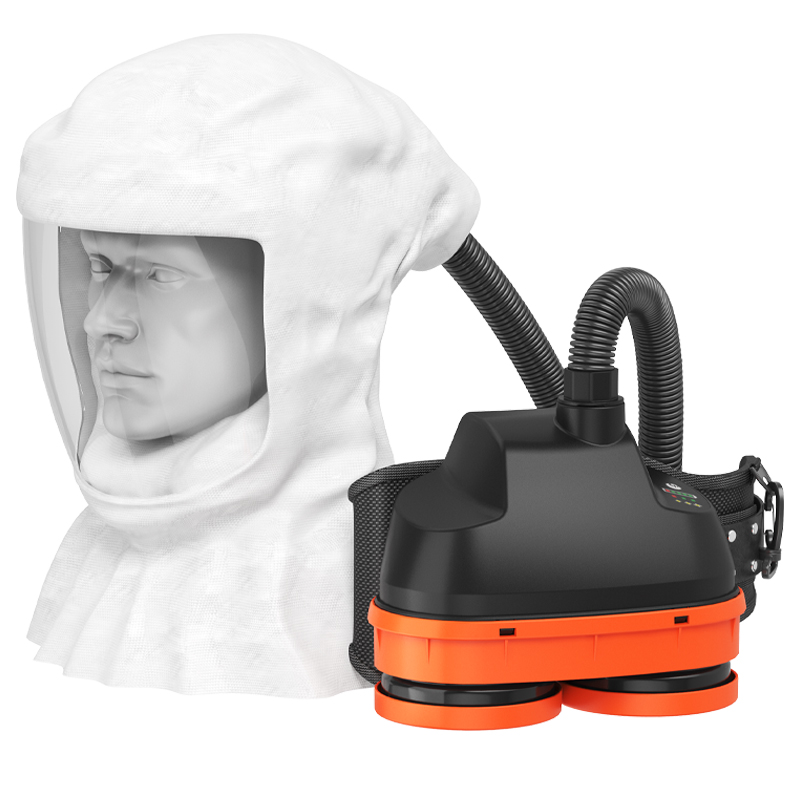
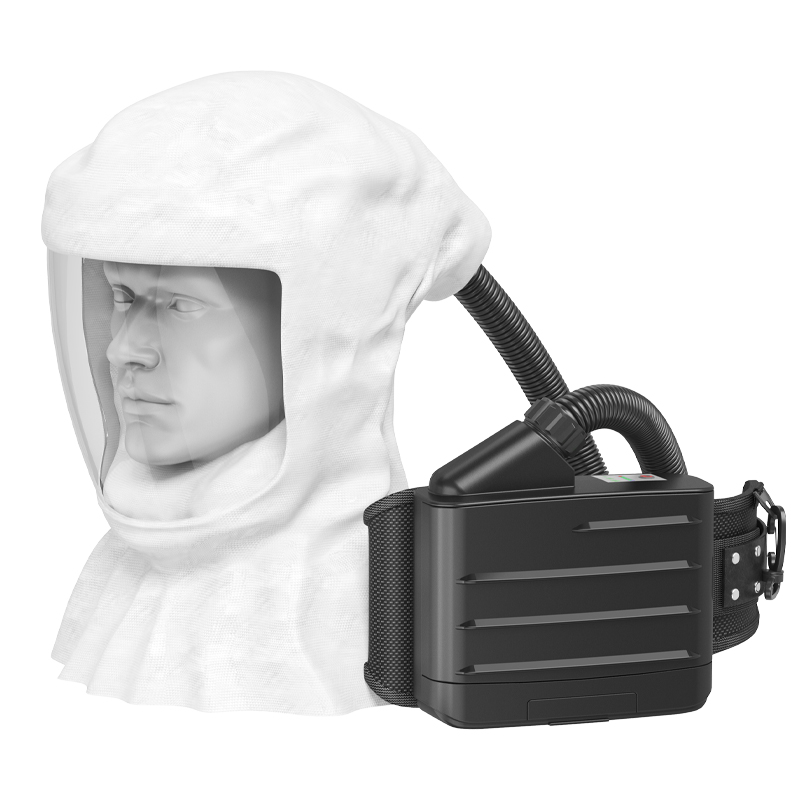
      In the petroleum refining industry, the high-temperature, high-pressure, and continuous reaction process characteristics mean that the operating environment is always surrounded by multiple occupational health risks. From cracking furnace decoking to hydroprocessing unit maintenance, from confined space operations to daily inspections, toxic and harmful substances such as hydrogen sulfide, benzene series, and heavy metal catalyst dust are ubiquitous. Respiratory protection has become the first and most important line of defense to ensure the life safety of workers. As an efficient respiratory protection equipment, full face papr respirator is no longer an optional "bonus item" but a "standard configuration" for safe production in refineries; more importantly, due to the great differences in hazards across operating scenarios, refineries must also adapt multiple types of PAPR to achieve precise protection and fully build a solid safety line of defense.   The respiratory hazards in refineries are complex and fatal, and traditional protective equipment is difficult to handle. During crude oil processing, highly toxic gases such as hydrogen sulfide and ammonia are produced. Hydrogen sulfide has the smell of rotten eggs at low concentrations, but at high concentrations, it can quickly paralyze the olfactory nerves, leading to "flash" coma or even death. At the same time, the "dust-toxin composite" pollution formed by the mixture of volatile organic compounds (VOCs) such as benzene and toluene with catalyst dust further increases the difficulty of protection. Traditional self-priming gas masks rely on passive adsorption and filtration, with limited protective capacity of the gas filter cartridge. They are prone to instantaneous penetration in high-concentration or complex mixture environments, and have high breathing resistance. Long-term wear can make workers exhausted, greatly reducing operational safety.   The active air supply and continuous positive pressure design of PAPR fundamentally improves protection reliability and lays the foundation for its adaptation to multiple scenarios. Different from traditional protective equipment, PAPR actively supplies air through a battery-driven fan, which can maintain a stable positive pressure environment inside the mask or hood—even if minor sealing gaps are caused by facial movements, clean air will overflow outward, completely blocking the infiltration path of toxic and harmful substances. A more core advantage lies in its modular filtration system: it is this design that allows positive airflow respirator to accurately select and match filter components according to the risk assessment results of different operations, thereby deriving multiple adaptive types and achieving precise protection of "one equipment for one scenario". This is also the key technical support for refineries to must use multiple types of PAPR.   The diversity of operating scenarios and the difference in hazards in refineries directly determine the need to use multiple types of PAPR. From the perspective of hazard types, there are highly toxic gases such as hydrogen sulfide and benzene series, particulate matter such as catalyst dust and asphalt fume, and more complex "dust-toxin composite" pollution; from the perspective of environmental characteristics, there are both ordinary inspection areas and flammable and explosive hazardous areas such as confined spaces and storage tank areas. Taking confined space operations (such as inside waste heat boilers and reactors) as an example, intrinsic safety type PAPR that meets ATEX or IECEx international explosion-proof certification must be used to avoid electric sparks from the motor causing explosions; decoking workers in catalytic cracking units face "dust-toxin composite" pollution and need to be equipped with PAPR with "high-efficiency dust filtration + composite gas filtration"; while inspection workers on oil transfer trestles only need to prevent crude oil impurity dust and can choose simple dust-filtering PAPR. If only a single type of PAPR is used, it will either lead to safety accidents due to insufficient protection or increase use costs and operational burden due to functional redundancy.   From the perspective of industry practice, the popularization of personal air respirator and the adaptation of multiple types have become a safety consensus among advanced refining enterprises. Whether it is hydroprocessing unit maintenance workers and storage tank cleaning workers who need explosion-proof PAPR, catalytic cracking decoking workers and sulfur recovery operators who need composite dust and gas filtering PAPR, or boiler ash cleaning workers and warehouse handlers who need simple dust-filtering PAPR, various types of PAPR are accurately matching the protective needs of different jobs. In today's high-quality development of the refining industry, safety is an insurmountable red line. Using PAPR is the basic premise to resist respiratory hazards, and adapting multiple types of PAPR is the core requirement to achieve comprehensive and precise protection—only the combination of the two can truly protect the respiratory safety of front-line workers and reflect the enterprise's intrinsic safety level.If you want know more, please click www.newairsafety.com.
    Read More
  • PAPR Hard Hat: The Rigorous Testing Journey
    PAPR Hard Hat: The Rigorous Testing Journey
    Dec 01, 2025
      In the field of industrial protection, powered purified air respirator is undoubtedly a robust piece of equipment that safeguards the health of workers. As a key component of the system, the hard hat serves as the first and most crucial line of defense for head safety. Many people regard a hard hat as just an ordinary "hat", but behind its safety functions lies a series of rigorous testing processes that are almost "demanding"—each one is related to life safety and allows no carelessness.   As a key component with core safety helmet functions, the primary mission of a hard hat is to resist external impact and penetration. The stability of its performance in high and low temperature environments is a litmus test for its quality. In low-temperature environments, most materials become brittle and hard, and their impact resistance decreases significantly, which is particularly dangerous for workers operating in cold workshops or outdoor freezing environments. The low-temperature impact resistance test simulates extreme scenarios at temperatures as low as minus 20℃ or even lower. The hard hat is fixed, and an impact hammer of specified weight is dropped from a specific height. The test observes whether the hard hat can effectively absorb impact energy, ensuring that the shell does not crack, the lining does not fall off, and the force on the head is minimized.   Contrary to low-temperature environments, high-temperature environments can soften materials and reduce their strength, which also impairs the protective performance of hard hats. For the high-temperature impact resistance test, the hard hat is placed in a high-temperature chamber at over 50℃ for a constant temperature period to fully adapt to the high-temperature environment, and then the impact test process is repeated. This test is mainly targeted at working scenarios such as metallurgy, casting, and high-temperature baking. It ensures that the hard hat can still maintain stable impact resistance under high-temperature exposure and will not "fail" due to material softening. After all, the protection of the powered face shield respirator is integrated, and a weakness in head protection may greatly compromise the protective effect of the entire system.   If impact resistance testing safeguards "surface" safety, then penetration resistance testing defends against "point" threats. In scenarios such as construction and mechanical processing, falling or splashing sharp objects like steel bars, nails, and fragments can easily cause fatal injuries to the head. The high and low temperature penetration resistance tests also simulate extreme temperature environments. A sharp penetration cone is used to impact key parts of the top or side of the hard hat at a specified speed and force. The requirement is that the penetration cone must not penetrate the shell, let alone touch the test model simulating the head. This test directly relates to the ability to resist "precision strikes" from sharp objects and is one of the core indicators of the hard hat's protective performance.   In addition to specialized tests for extreme environments, the aging resistance test is a strict assessment of the hard hat's "service life". During long-term use, hard hats are affected by various factors such as sunlight exposure, humidity changes, and chemical gas erosion. The materials may gradually age and become brittle, and the protective performance may slowly decline. The aging resistance test uses methods such as ultraviolet radiation and humidity-heat cycling to accelerate aging, simulating years of service environment. After that, impact resistance, penetration resistance and other performance tests are re-conducted to ensure that the hard hat maintains qualified protective levels throughout its specified service life and avoids potential safety hazards of "seeming intact but actually failing" due to material aging.   From low temperature to high temperature, from impact resistance to penetration resistance, and to long-term aging resistance, the hard hat in High-Flow PAPR System has become a "head safety shield" for workers after going through this series of rigorous "tempering" tests. Behind each test data is respect for life; every hard hat that passes the tests is a fulfillment of the safety commitment. Therefore, when we see workers busy at their posts wearing hard hats, we might as well have a deeper understanding—this "hat" has gone through countless trials, all to safeguard every safe operation.If you want know more,please click www.newairsafety.com.
    Read More

  • PAPR vs. N95 Masks: Key Differences & Selection Guide
    PAPR vs. N95 Masks: Key Differences & Selection Guide
    Sep 19, 2025
    PAPR (Powered Air-Purifying Respirator) and N95 masks are common respiratory protection tools, but their protection logic and use cases differ significantly. The key to choosing lies in "matching risk needs."   In terms of protection principle: N95 is "passive filtration"—it uses non-woven filters to trap ≥95% of non-oil-based particles, driven by the wearer’s inhalation (negative pressure). Its effectiveness depends entirely on a tight fit to the face—gaps render it useless. paprs, by contrast, is "active air-supply": a power unit delivers filtered air into the mask at positive pressure, no tight fit required, and prevents external contaminants from seeping in.   For performance and scenarios: N95 only blocks non-oil-based particles, suitable for low-to-moderate risks (e.g., everyday epidemic prevention, general dust work) and short wear times. papr respirators works with replaceable filters (for particles/toxic gases), offering higher protection. It fits high-risk scenarios (e.g., ICU care, chemical maintenance) or users with facial hair (who can’t get a tight N95 fit).   Comfort varies greatly: N95s require a tight fit, leading to labored breathing and facial marks during prolonged wear. PAPR’s active air-supply eliminates breathing resistance, reduces moisture/heat, and supports over 8 hours of continuous wear—ideal for long shifts.   Cost and management: N95s are mostly disposable—low per-unit cost but high long-term consumption costs, with simple management. PAPR has a high initial cost , but is reusable (only filters/batteries need replacement), lowering long-term costs. However, it needs regular maintenance and user training.   The core of selection: Choose N95 for low-to-moderate risks, short wear, and a tight facial fit. Choose PAPR for high risks, long wear, or poor facial fit. Always conduct a risk assessment first to ensure effective protection.If you want know more, please click www.newairsafety.com.
    Read More
leave a message

leave a message
If you are interested in our products and want to know more details,please leave a message here,we will reply you as soon as we can.
submit
Contact Us: sales@txhyfh.com

home

products

WhatsApp

Contact us