inquiry
Leave A Message
If you are interested in our products and want to know more details,please leave a message here,we will reply you as soon as we can.
submit
Bengbu Longkai Welding Protection Technology Co.,Ltd.
Home

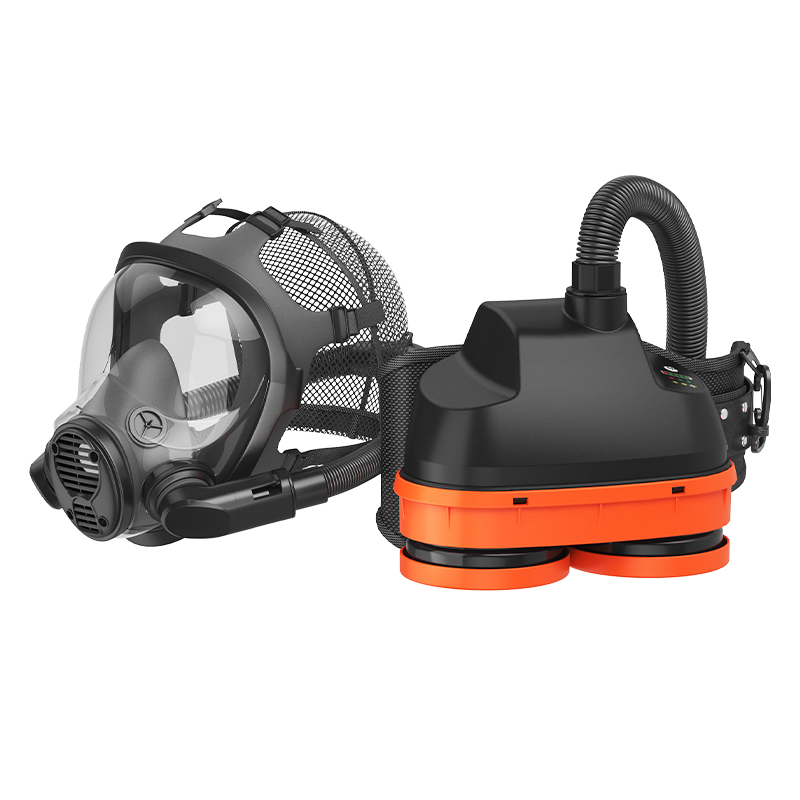
Positive Pressure Air Purifying Respirator With Hard Hat

Positive Pressure Air Purifying Respirator With Hard Hat

  • Refinery PAPR Selection Guide
    Refinery PAPR Selection Guide
    Jan 08, 2026
      Refineries have a long process chain and complex operating scenarios, with significant differences in respiratory hazards faced by different occupations—some need to cope with flammable and explosive environments, some have to resist "dust-toxin composite" pollution, and others only need to prevent dust intrusion. The core of selecting purifying respirator is "matching risks on demand". The following combines the core occupations in refineries to clarify the applicable scenarios of various types of PAPR, providing a reference for enterprises to accurately configure protective equipment.   Explosion-Proof PAPR: Suitable for high-risk occupations in flammable and explosive environments. Scenarios such as hydroprocessing units, reforming units, gasoline/diesel storage tank areas, and confined space operations in refineries contain flammable and explosive gases such as hydrogen sulfide, methane, and benzene series, which belong to explosive hazardous areas (e.g., Zone 1, Zone 2). Occupations in such scenarios must use PAPR that meets explosion-proof certification. Typical occupations include: Hydroprocessing Unit Maintenance Workers (responsible for opening and maintaining reactors and heat exchangers, with high concentrations of hydrogen and hydrogen sulfide in the environment), Storage Tank Cleaning Workers (working inside crude oil tanks and finished product tanks, where residual oil and gas in the tanks are prone to forming explosive mixtures), Catalytic Cracking Unit Operators (patrolling the reaction-regeneration system, with the risk of oil and gas leakage), and Confined Space Workers (working in enclosed spaces such as reactors, waste heat boilers, and underground pipelines). Such PAPR must have ATEX or IECEx intrinsic safety explosion-proof certification, and core components such as motors and batteries need to isolate electric sparks to avoid causing explosion accidents.   Gas + Dust Filtering Composite respiratory papr: Main type for occupations facing "coexistence of dust and toxins" scenarios. Most process links in refineries simultaneously generate toxic gases and dust, forming "dust-toxin composite" pollution. Occupations in such scenarios need to select composite PAPR with "high-efficiency dust filtration + dedicated gas filtration". Typical occupations include: Catalytic Cracking Unit Decoking Workers (a large amount of catalyst dust is generated during decoking, accompanied by leakage of VOCs and hydrogen sulfide in cracked gas), Asphalt Refining Workers (toxic gases such as benzopyrene are released during asphalt heating, along with asphalt fume), Sulfur Recovery Unit Operators (there is a risk of sulfur dioxide and hydrogen sulfide leakage when treating sulfur-containing tail gas, accompanied by sulfur dust), and Spent Catalyst Handlers (dust is pervasive when handling and screening spent catalysts, and the catalysts may contain heavy metal toxic components).    Dust-Only Filtering PAPR: Suitable for occupations with no toxic gases and only dust pollution. In some auxiliary or subsequent processes of refineries, the operating environment only generates dust without the risk of toxic gas leakage. At this time, selecting a simple dust-filtering powered respirators can meet the protection needs while ensuring wearing comfort. Typical occupations include: Oil Transfer Trestle Inspectors (crude oil impurity dust is generated during crude oil loading and unloading, with no toxic gas release), Boiler Ash Cleaning Assistants (cleaning ash in the furnace of coal-fired or oil-fired boilers, where the main pollutants are fly ash and slag dust), Lubricating Oil Blending Workshop Operators (lubricating oil dust is generated during the mixing of base oil and additives, with no toxic volatiles), and Warehouse Material Handlers (packaging dust is generated when handling bagged catalysts and adsorbents, and the working area is well-ventilated with no accumulation of toxic gases).    Supplementary Note: Some occupations need to flexibly adapt to multiple types of PAPR. For example, equipment maintenance fitters in refineries may need to enter confined spaces for explosion-proof operations (using explosion-proof PAPR) and also perform ash cleaning and maintenance outside equipment (using simple dust-filtering PAPR); when instrument maintenance workers operate in different plant areas, they need to use composite PAPR if maintaining toxic gas leakage points, and may use simple dust-filtering PAPR only for routine inspections. Therefore, in addition to basic configuration by occupation, enterprises also need to dynamically adjust the type of PAPR according to the risk assessment results before operation to ensure precise protection. In summary, PAPR selection in refineries is not a "one-size-fits-all" approach, but focuses on "hazard identification", distinguishing three core types (explosion-proof, composite gas and dust filtering, and simple dust filtering) based on the type of hazards in the occupational operating scenarios. Accurate selection can not only ensure the respiratory safety of workers but also reduce the use cost of protective equipment and improve operational efficiency, building a solid line of defense for the safe production of enterprises.If you want know more, please click www.newairsafety.com.
    Read More
  • PAPR Cartridge Replacement: Cycle & Key Considerations
    PAPR Cartridge Replacement: Cycle & Key Considerations
    Dec 09, 2025
      In scenarios with toxic and harmful gases such as chemical workshops, painting stations, and laboratories, PAPR (air purification respirator) is undoubtedly a "breathing barrier" for practitioners. As the core component of PAPR that filters toxic media, the timing of cartridge replacement directly affects the protective effect—replacing too early causes cost waste, while replacing too late may expose users to risks. Many users are accustomed to replacing "based on experience or fixed timetables," but overlook the impact of environmental differences and operational details. Today, we will sort out the scientific replacement cycle of PAPR cartridges and the key precautions to avoid safety hazards.   First of all, it is clear that there is no unified "fixed replacement cycle" for cartridges. Their service life is affected by four core factors and must be judged dynamically based on actual scenarios. The most critical factor is the concentration and type of pollutants. For example, in a high-concentration organic vapor environment, the adsorption capacity of the cartridge will be saturated quickly, and replacement may be required within a few hours; while in a low-concentration, intermittent exposure scenario, the service life can be extended to several weeks. Secondly, the duration of use matters—continuous 8-hour work per day requires a different replacement frequency than occasional short-term use. Environmental temperature and humidity cannot be ignored either; high temperature and humidity will accelerate the aging of the adsorbent in the cartridge and reduce adsorption efficiency. For instance, in a hot and humid spraying workshop in summer, the replacement interval should be appropriately shortened. Finally, the model and specification of the cartridge also have an impact. Cartridges from different brands designed for different gases (such as acidic gases, organic vapors, ammonia, etc.) have different adsorption capacities and design lifespans, so judgment should be based on the manufacturer's instructions.   Although there is no fixed cycle, there are four intuitive signals that "mandate replacement", which users must always be alert to. The first is "odor perception"—when a pungent odor of pollutants is smelled while wearing the PAPR, it indicates that the cartridge has failed and the adsorbent can no longer block toxic gases, so immediate shutdown and replacement are necessary. The second is "change in breathing resistance"—if the PAPR's air supply feels heavy and more effort is needed for breathing, the adsorbent inside the cartridge may be saturated and caked, causing blockage of the air flow channel. In this case, replacement is required even if the expected cycle has not been reached. The third is "alarm prompt"—some intelligent powered air respirator are equipped with cartridge life monitoring devices, which will issue an audio-visual alarm when the preset saturation threshold is reached, which is the most direct replacement instruction. The fourth is "shelf life and storage period"—even if unused, cartridges exposed to air after opening will gradually absorb moisture and impurities, and generally should not be stored for more than 30 days after opening; unopened cartridges must also be used within their shelf life, as their adsorption performance will drop significantly after expiration and they can no longer be put into use.   In addition to grasping the replacement timing, operational standards during replacement are equally important, as they directly determine whether the new cartridge can exert its due effect. Preparation is required before replacement: first, shut down and power off the PAPR to avoid accidental contact with the air supply device during replacement; then move to a clean, pollutant-free area to operate, preventing toxic gases from entering the mask or contaminating the new cartridge during replacement. Attention should be paid to sealing during replacement: after removing the old cartridge, check whether the sealing gasket at the connection interface is damaged or aged—if the gasket is deformed, it needs to be replaced in time; when installing the new cartridge, align it with the interface and tighten it clockwise until a "click" sound is heard to ensure there are no loose gaps. An airtightness test must be carried out after replacement: put on the PAPR, turn on the air supply, and cover the air inlet of the cartridge with a hand. If negative pressure is generated in the mask and the mask fits tightly against the face during breathing, it indicates good sealing; if there is air leakage, recheck the installation or replace the sealing components.   Finally, there are some easily overlooked details that can further extend the service life of the cartridge and improve protection safety. First, keep usage records—record the cartridge model, replacement date, usage scenario, and pollutant concentration each time it is replaced. By accumulating data, gradually explore the replacement rule suitable for your own work scenario. Second, store cartridges in categories—different types of cartridges (such as those for organic vapors and acidic gases) should be stored separately to avoid confusion in use. Using the wrong cartridge not only fails to provide protection but may also damage the equipment due to chemical reactions. Third, dispose of waste cartridges—failed cartridges may retain toxic media and should be sealed, placed in a special hazardous waste recycling bin, and handed over to professional institutions for disposal. They must not be discarded or disassembled at will. Breathing safety is no trivial matter, and cartridge replacement is never a "formality." Only by scientifically judging the cycle and standardizing the operation process can papr respirators truly become a "solid line of defense" for protecting breathing.If you want know more, please click www.newairsafety.com.
    Read More

leave a message

leave a message
If you are interested in our products and want to know more details,please leave a message here,we will reply you as soon as we can.
submit
Contact Us: sales@txhyfh.com

home

products

WhatsApp

Contact us