inquiry
Leave A Message
If you are interested in our products and want to know more details,please leave a message here,we will reply you as soon as we can.
submit
Bengbu Longkai Welding Protection Technology Co.,Ltd.
Home

cheap papr respirator

cheap papr respirator

  • PAPR for Lead-Acid Batteries & Recycling
    PAPR for Lead-Acid Batteries & Recycling
    Jan 22, 2026
      Lead-acid battery manufacturing and lead recycling are high-risk operations, with pervasive lead-containing pollutants such as lead fumes (particle size ≤0.1μm), lead dust (particle size >0.1μm), and sulfuric acid mist in certain processes. These contaminants pose severe threats to workers' respiratory health—chronic lead inhalation can cause irreversible damage to the nervous system, kidneys, and hematopoietic system, while sulfuric acid mist irritates the respiratory tract and corrodes tissues. Papr system with their positive-pressure design that minimizes leakage and reduces breathing fatigue during long shifts, outperform traditional negative-pressure respirators in high-exposure scenarios and have become indispensable protective equipment in these industries.   In lead-acid battery manufacturing, papr system kit selection must match the specific risks of each process. Lead powder preparation, paste mixing, and plate casting generate high concentrations of lead dust and fumes, requiring high-efficiency particulate-filtering PAPRs paired with HEPA filters (filtering efficiency ≥99.97% for 0.3μm particles) to capture fine lead particles. For automated production lines with moderate dust levels, air-fed hood-type PAPRs are ideal—they eliminate the need for facial fit testing, enhance comfort during 6-8 hour shifts, and integrate seamlessly with protective clothing. In the formation process where sulfuric acid mist is prevalent, combined-filtering PAPRs (dual filtration for particulates and acid gases) are mandatory, using chemical adsorption elements to neutralize acidic vapors and prevent corrosion of respiratory tissues.   Lead recycling processes such as battery crushing, desulfurization, and smelting present more complex risks, demanding specialized powered air respirator tailored to the scenario. Mechanical crushing and sorting release mixed lead dust and plastic particles, requiring durable PAPRs with reliable filtration systems and dust-proof enclosures (IP65 protection rating recommended) to withstand harsh operating environments. Smelting operations produce high-temperature lead fumes, sulfur dioxide, and in some cases, dioxins, thus necessitating heat-resistant combined-filtering PAPRs with dual filter elements. These systems must filter both particulates and toxic gases, and the hood design should be resistant to thermal deformation and compatible with flame-retardant protective gear for comprehensive safety.   Practical details in daily use directly affect the protective effectiveness of PAPRs and worker compliance. For mobile operations (e.g., on-site recycling), battery-powered portable PAPRs are preferred, equipped with replaceable batteries to ensure uninterrupted protection throughout an 8-hour workday. Equipment materials must be resistant to common disinfectants such as hydrogen peroxide to facilitate daily decontamination and avoid cross-contamination between shifts. Regular maintenance is indispensable: particulate filters should be replaced promptly when resistance increases, gas filters within 6 months of opening, and PAPR systems calibrated quarterly to ensure positive pressure and air flow rate (minimum 95 L/min for full-face models) comply with standard requirements.   Beyond equipment selection, establishing a comprehensive respiratory protection system is equally critical. Priority should be given to automated processes and enclosed systems to reduce exposure at the source, with PAPRs serving as the key final line of defense. By integrating standard-compliant, process-adapted PAPRs with sound safety protocols, lead-acid battery manufacturing and lead recycling enterprises can protect worker health, meet regulatory requirements, and promote sustainable industry practices.If you want know more, please click www.newairsafety.com.
    Read More
  • Refinery PAPR Selection Guide
    Refinery PAPR Selection Guide
    Jan 08, 2026
      Refineries have a long process chain and complex operating scenarios, with significant differences in respiratory hazards faced by different occupations—some need to cope with flammable and explosive environments, some have to resist "dust-toxin composite" pollution, and others only need to prevent dust intrusion. The core of selecting purifying respirator is "matching risks on demand". The following combines the core occupations in refineries to clarify the applicable scenarios of various types of PAPR, providing a reference for enterprises to accurately configure protective equipment.   Explosion-Proof PAPR: Suitable for high-risk occupations in flammable and explosive environments. Scenarios such as hydroprocessing units, reforming units, gasoline/diesel storage tank areas, and confined space operations in refineries contain flammable and explosive gases such as hydrogen sulfide, methane, and benzene series, which belong to explosive hazardous areas (e.g., Zone 1, Zone 2). Occupations in such scenarios must use PAPR that meets explosion-proof certification. Typical occupations include: Hydroprocessing Unit Maintenance Workers (responsible for opening and maintaining reactors and heat exchangers, with high concentrations of hydrogen and hydrogen sulfide in the environment), Storage Tank Cleaning Workers (working inside crude oil tanks and finished product tanks, where residual oil and gas in the tanks are prone to forming explosive mixtures), Catalytic Cracking Unit Operators (patrolling the reaction-regeneration system, with the risk of oil and gas leakage), and Confined Space Workers (working in enclosed spaces such as reactors, waste heat boilers, and underground pipelines). Such PAPR must have ATEX or IECEx intrinsic safety explosion-proof certification, and core components such as motors and batteries need to isolate electric sparks to avoid causing explosion accidents.   Gas + Dust Filtering Composite respiratory papr: Main type for occupations facing "coexistence of dust and toxins" scenarios. Most process links in refineries simultaneously generate toxic gases and dust, forming "dust-toxin composite" pollution. Occupations in such scenarios need to select composite PAPR with "high-efficiency dust filtration + dedicated gas filtration". Typical occupations include: Catalytic Cracking Unit Decoking Workers (a large amount of catalyst dust is generated during decoking, accompanied by leakage of VOCs and hydrogen sulfide in cracked gas), Asphalt Refining Workers (toxic gases such as benzopyrene are released during asphalt heating, along with asphalt fume), Sulfur Recovery Unit Operators (there is a risk of sulfur dioxide and hydrogen sulfide leakage when treating sulfur-containing tail gas, accompanied by sulfur dust), and Spent Catalyst Handlers (dust is pervasive when handling and screening spent catalysts, and the catalysts may contain heavy metal toxic components).    Dust-Only Filtering PAPR: Suitable for occupations with no toxic gases and only dust pollution. In some auxiliary or subsequent processes of refineries, the operating environment only generates dust without the risk of toxic gas leakage. At this time, selecting a simple dust-filtering powered respirators can meet the protection needs while ensuring wearing comfort. Typical occupations include: Oil Transfer Trestle Inspectors (crude oil impurity dust is generated during crude oil loading and unloading, with no toxic gas release), Boiler Ash Cleaning Assistants (cleaning ash in the furnace of coal-fired or oil-fired boilers, where the main pollutants are fly ash and slag dust), Lubricating Oil Blending Workshop Operators (lubricating oil dust is generated during the mixing of base oil and additives, with no toxic volatiles), and Warehouse Material Handlers (packaging dust is generated when handling bagged catalysts and adsorbents, and the working area is well-ventilated with no accumulation of toxic gases).    Supplementary Note: Some occupations need to flexibly adapt to multiple types of PAPR. For example, equipment maintenance fitters in refineries may need to enter confined spaces for explosion-proof operations (using explosion-proof PAPR) and also perform ash cleaning and maintenance outside equipment (using simple dust-filtering PAPR); when instrument maintenance workers operate in different plant areas, they need to use composite PAPR if maintaining toxic gas leakage points, and may use simple dust-filtering PAPR only for routine inspections. Therefore, in addition to basic configuration by occupation, enterprises also need to dynamically adjust the type of PAPR according to the risk assessment results before operation to ensure precise protection. In summary, PAPR selection in refineries is not a "one-size-fits-all" approach, but focuses on "hazard identification", distinguishing three core types (explosion-proof, composite gas and dust filtering, and simple dust filtering) based on the type of hazards in the occupational operating scenarios. Accurate selection can not only ensure the respiratory safety of workers but also reduce the use cost of protective equipment and improve operational efficiency, building a solid line of defense for the safe production of enterprises.If you want know more, please click www.newairsafety.com.
    Read More

  • PAPR Consumables Incompatibility: Why Different Brands Don’t Mix?
    PAPR Consumables Incompatibility: Why Different Brands Don’t Mix?
    Dec 01, 2025
      In high-risk work scenarios such as chemical engineering, metallurgy, and construction, air fed respirator serves as the "lifeline" safeguarding workers' respiratory safety. The stable operation of this system relies not only on the power output of the core fan but also on the coordinated cooperation of a series of consumable components, including spark arrestors, pre-filters, HEPA filters, and breathing tubes. However, in practical use, many enterprises encounter a tricky problem: the sizes of consumable components for PAPRs from different brands vary greatly, which directly results in incompatibility between components of different fans.Choosing incompatible parts at will not only affect system operation, but may also create serious safety hazards.   Why do consumable components of powered mask respirator from different brands have size differences? The core reason is that there is no fully unified size standard for consumables in the industry. Enterprises usually customize exclusive component size specifications based on their own fan's structural design, power parameters, and protective requirements. On one hand, fundamental parameters such as air duct diameter, interface design, and installation slot position of fans from different brands are essentially different. To achieve optimal sealing and air supply efficiency, supporting consumables must accurately match these parameters. On the other hand, some enterprises intentionally adopt differentiated size designs to build technical barriers and ensure product competitiveness, ensuring that their consumables can only be compatible with their own fans. This fundamentally eliminates the possibility of cross-brand compatibility.   The most representative examples of compatibility issues are spark arrestors and pre-filters. As a key component preventing sparks from entering the fan and causing hazards, spark arrestors vary significantly among different brands in terms of outer diameter, inner mesh aperture, and connecting thread specifications with the fan. A spark arrestor for a fan of Brand A may use an M20 threaded interface with an outer diameter of 35mm, while Brand B's may have an M18 thread and an outer diameter of 32mm. Forced replacement will not only fail to tighten and fix the component but also leave gaps leading to spark leakage. Pre-filters also have obvious size differences: some brands adopt a circular design with a diameter of 150mm, matching the annular slot of their own fans; others have a square structure with a side length of 145mm, paired with a snap-on installation. These two types are completely incompatible with each other.   Compatibility challenges with HEPA filters and breathing tubes are even more directly related to the core effect of respiratory protection. As a key component for filtering fine particles, HEPA filters differ in sealing edge width, installation depth, and docking method with the fan. For example, the sealing edge width of Brand A's HEPA filter is 8mm and the installation depth is 20mm, while the corresponding dimensions of Brand B are 10mm and 18mm. Even if it is barely installed, the poor sealing will cause unfiltered air to leak, significantly reducing the protection level. Breathing tubes also have prominent compatibility issues: different brands have differences in interface diameter and thread design. Some use quick-plug interfaces, while others adopt screw-lock interfaces. Mixing them not only causes abnormal air supply resistance but also may suddenly fall off during operation, triggering safety accidents.   Incompatible components bring not only inconvenience in use but also multiple hidden risks. To save costs, many enterprises try to purchase non-original "universal accessories", which often leads to increased fan operation noise, reduced air supply efficiency, and even fan shutdown due to component jamming. More seriously, inappropriate filter components cannot effectively block harmful substances, which may cause workers to inhale dust and toxic gases; breathing tubes with poor sealing will allow external pollutants to seep in, rendering the PAPR completely ineffective. The root cause of these problems lies in ignoring the uniqueness of consumable sizes for PAPRs of different brands and equating "universal" with "compatible".   To address the compatibility challenges of powered air supply respirator consumables, enterprises and workers should establish a sense of "accurate matching". When replacing components, first check the brand and model of the fan, and give priority to original supporting consumables to ensure that the size, interface, and sealing performance are fully compatible. If changing brands, consult the supplier in advance to confirm the compatibility of new components with existing fans, and conduct on-site tests if necessary. After all, the protective effect of PAPR depends on the precise coordination of each component. Only by rejecting compromised compatibility can this "lifeline of protection" truly play its role and lay a solid foundation for work safety.If you want know more,please click www.newairsafety.com.
    Read More

  • How to Choose the Right PAPR? A Buying Guide
    How to Choose the Right PAPR? A Buying Guide
    Nov 05, 2025
      In workplaces with respiratory hazards such as chemical engineering, mining, powered air-purifying respirators (PAPRs) are key equipment for safeguarding health. Compared with traditional masks, they offer more stable protection and greater wearing comfort. However, the market is flooded with a wide range of products, so mastering core selection methods is essential to find the right fit.   Clarifying the work scenario is the first step. For dust-prone environments like mines and construction sites, prioritize PAPRs equipped with N95 or higher-grade filter cotton. For scenarios involving hazardous gases such as chemical industry, it is necessary to match corresponding gas cartridges and ensure the protection range matches the type of pollutants. For special environments with humidity, high temperature or electrostatic risks, pay attention to the product's waterproof, high-temperature resistant and anti-static properties.   Core performance parameters are key considerations. Filtration efficiency must meet international standards ( US NIOSH, EU CE), ensuring no less than 95% filtration efficiency for target pollutants. For high-risk scenarios, 99.9% high-efficiency filters are recommended. For continuous operations over 8 hours, choose models with replaceable batteries or fast-charging function to avoid protection gaps caused by power outages.   Wearing comfort and adaptability directly affect user acceptance and compliance. For hooded PAPRs, the weight should preferably be controlled within 1.5 kg, while face-mask types are lighter and won't cause neck fatigue during long-term wear. Fit is also crucial—select styles with adjustable headbands and soft face seals to ensure a snug fit for different head shapes. Meanwhile, check the field of vision to avoid obstructing operational vision. Brand qualifications and after-sales service are essential guarantees. Avoid unqualified products from small manufacturers for low prices; prioritize brands with rich R&D experience in protective equipment and authoritative certifications (such as CE, national standard testing certificates). Confirm sufficient supply of consumables like filter cotton, and check if the brand provides on-site commissioning, staff training and fault repair services.   Additionally, ensure the product supports regular calibration, as papr respirator system performance degrades over time, and calibration maintains protection effectiveness.   Finally, it's important to note that there is no "one-size-fits-all" PAPR, only "suitable models". Before purchasing, investigate frontline needs and conduct trial wears if necessary. Establish a sound usage management system, including regular replacement of filters, battery maintenance and staff operation training, to ensure the PAPR truly exerts its protective effect.If you want know more, please click  www.newairsafety.com.
    Read More
  • Practical Guide – PAPR Adaptation Tips for Four Welding Methods
    Practical Guide – PAPR Adaptation Tips for Four Welding Methods
    Oct 28, 2025
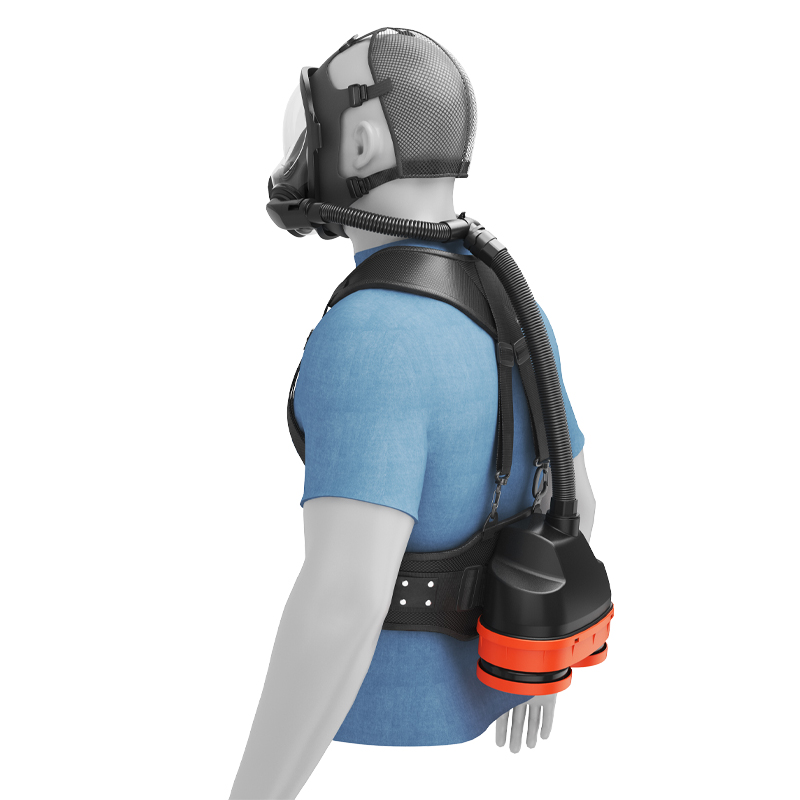
    For welders, choosing the right protective gear matters more than just "wearing gear." While PAPR offers high protection, it needs tailored adjustments for different welding scenarios. Mastering PAPR adaptation tips ensures effective protection.   For SMAW (frequent torch movement, spark splashes), papr system kit requires impact-resistant face shields (meeting industrial standards) to avoid spark damage. Use standard high-efficiency filter cartridges and clean dust from filters regularly to maintain air supply efficiency.   Plasma Arc Welding & Cutting emits intense UV/IR radiation alongside high-concentration fine fumes. PAPR’s face shield must have UV-protective coating. Select higher-efficiency filters and check fan strength to ensure sufficient clean air supply.   Carbon Arc Gouging (high intensity, splashes, thick fumes) demands durable, sealed PAPR face shields. Check face shield fit to prevent splash leakage. Shorten filter replacement cycles – inspect filters before work and replace them if breathing resistance increases.   Oxyfuel Welding & Cutting often occurs in narrow spaces with flammable gas risks. Choose explosion-proof PAPR models to avoid spark hazards. Use gas-specific canisters, and check canister validity (no moisture/expiry) before work.   Welding rhythms affect air papr usability: SMAW (long continuous work) needs backup batteries; carbon arc gouging (short intervals) requires quick-change filters. After work, clean PAPR (remove residual fumes) and inspect parts to extend service life.   PAPR adaptation hinges on "customization" – select filters by pollutant type, protective performance by environment, and configuration by work rhythm. Optimizing PAPR use ensures efficient, practical protection for welders.If you want know more, please click www.newairsafety.com.
    Read More
  • Key Components and Structure of Gas Mask Canisters: Understanding the "Core Architecture" Behind Protection
    Key Components and Structure of Gas Mask Canisters: Understanding the "Core Architecture" Behind Protection
    Aug 25, 2025
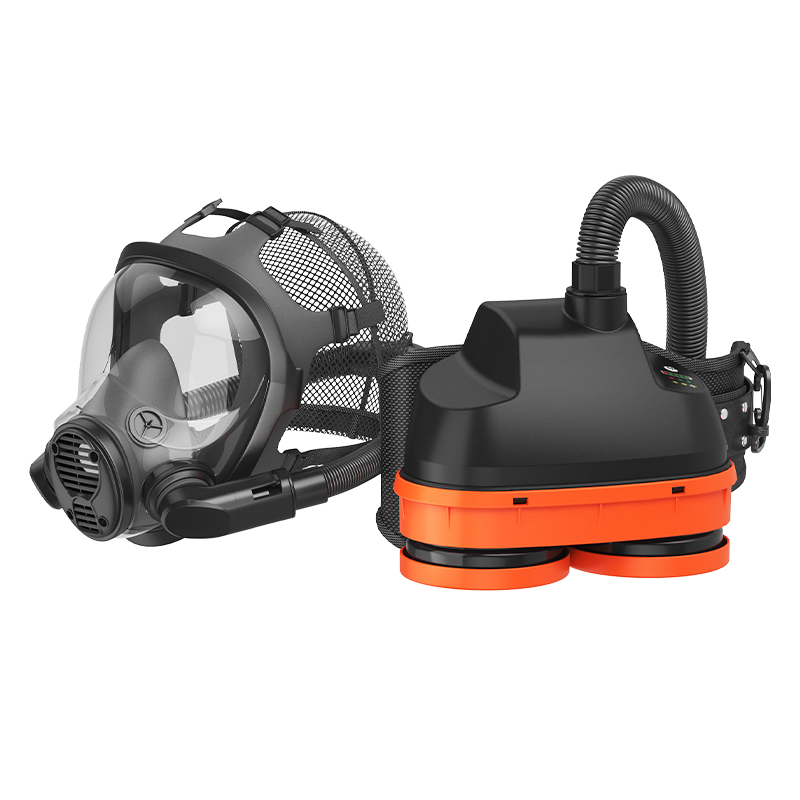
    In the respiratory protection system, gas mask canisters serve as the "core line of defense" against harmful gases/vapors—especially when paired with Powered Air-Purifying Respirators (PAPRs), which rely on high-quality canisters to deliver clean, filtered air. Their structural design and component selection directly determine the protection effectiveness against gas series such as A, B, E, and K (corresponding to organic gases, inorganic gases, acidic gases, and ammonia/amine gases mentioned earlier), making this match critical for users of powered respirator mask .Below is a breakdown of the working principle of gas mask canisters from two aspects: "layered structure" and "key components," with a focus on how they integrate with best papr respirator.   I. Typical Structure of Gas Mask Canisters: "Layered Protection Design" from Outside to Inside​   Gas mask canisters usually adopt a cylindrical sealed structure (made of metal or high-strength plastic to ensure impact resistance and leakproofness)—a design tailored to fit the airflow systems of Powered Air-Purifying Respirators. Internally, they are divided into 4 core functional layers according to the "airflow direction." These layers work together to implement the protection logic of "first filtering impurities, then adsorbing/neutralizing harmful gases"—a process that aligns with the continuous air supply mechanism of papr respirator welding:​   1. Outer Shell and Sealing Layer​ Function: Protect internal filter materials from moisture and damage, while ensuring airflow only passes through preset channels (to avoid "short-circuit leakage")—a non-negotiable requirement for Powered Air-Purifying Respirators, which depend on unobstructed, sealed airflow to maintain positive pressure in the mask.​ Details: The top/bottom of the shell is equipped with threaded interfaces, which can be accurately connected to the pipelines of face masks or Powered Air-Purifying Respirators (PAPRs). Rubber gaskets are usually installed at the interfaces to enhance sealing—this prevents unfiltered gas from directly entering the breathing zone, a risk that could undermine the protective effect of Powered Air-Purifying Respirators entirely.​ 2. Pre-Filtration Preprocessing Layer (Optional)​ Function: Filter particulates such as dust and water mist in the air to prevent them from clogging the pores of the subsequent adsorption layer, thereby extending the service life of the gas mask canister. For Powered Air-Purifying Respirators used in mixed-hazard environments (e.g., dusty chemical plants), this layer reduces the frequency of canister replacement and maintains consistent airflow.​ Applicable Scenarios: If particulates exist in the working environment (e.g., paint mist in spray booths, dust in chemical workshops), the gas mask canister will integrate this layer. Its material is similar to the "P-series particulate filter materials" mentioned earlier (e.g., melt-blown polypropylene fiber), which can achieve P1-P3 level filtration efficiency—ideal for pairing with Powered Air-Purifying Respirators in scenarios where both gases and particulates are present.​ 3. Core Adsorption/Neutralization Layer (Most Critical)​ Function: Capture and remove harmful gases/vapors through physical adsorption or chemical neutralization. It is the "core functional area" of the gas mask canister, and its components must be accurately matched to the type of gas to be protected (A/B/E/K series)—a match that directly affects the safety of users relying on Powered Air-Purifying Respirators for continuous protection.​ Structural Features: Adopts a "granular filter material filling" or "honeycomb filter element" design to increase the contact area between the filter material and airflow. This ensures full reaction of gases—essential for Powered Air-Purifying Respirators, which deliver a steady stream of air that must be fully purified before reaching the user.​ 4. Rear Support and Dust-Proof Layer​ Function: Fix the filter material of the core adsorption layer to prevent particles from falling off and entering the breathing zone; at the same time, block a small amount of fine impurities not filtered by the pre-filtration layer to further purify the airflow. This layer is particularly important for Powered Air-Purifying Respirators that operate at higher airflow rates, as faster air movement could dislodge loose filter particles without proper support.​ Material: Mostly breathable non-woven fabric or metal mesh, which has both support and air permeability—balancing structural stability with the airflow demands of Powered Air-Purifying Respirators.If you want know more, please click www.newairsafety.com.
    Read More
leave a message

leave a message
If you are interested in our products and want to know more details,please leave a message here,we will reply you as soon as we can.
submit
Contact Us: sales@txhyfh.com

home

products

WhatsApp

Contact us