Dec 15, 2025
When people think of woodworking, images of flying wood shavings and the rich aroma of wood often come to mind. Yet few pay attention to the invisible "health killers"—wood dust. Many craftsmen are used to wearing regular masks while working, thinking, "As long as the large particles are blocked, it’s fine." But with the increasing awareness of occupational health, more and more practitioners are turning to papr system. Today, let’s explore why woodworking, a seemingly "down-to-earth" craft, requires such "professional-grade" protective equipment.
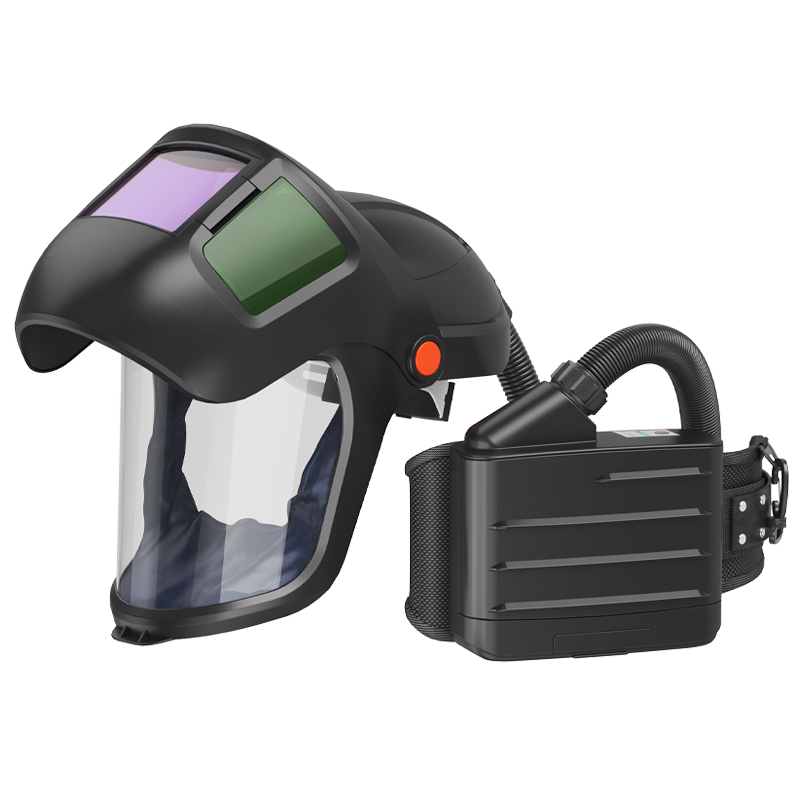
First, it’s crucial to understand: the hazards of wood dust are far greater than you might imagine. Wood processing generates not only visible wood chips but also a large amount of inhalable particles (PM2.5). These tiny particles can penetrate deep into the respiratory tract, and long-term accumulation may lead to occupational diseases such as pneumoconiosis and bronchitis. What’s more troublesome is that dust from some hardwoods (such as rosewood and oak) contains allergenic components, which can cause skin itching and asthma attacks upon contact. Regular masks either have insufficient filtration efficiency or poor sealing—dust can easily seep through gaps around the nose and chin, greatly reducing their protective effect. The core advantage of a positive air purifying respirator lies in its "active protection + high-efficiency filtration": it actively draws in air through a built-in fan, filters it through a HEPA filter, and then delivers the clean air to the mask, blocking dust intrusion at the source.
The complexity of woodworking scenarios further highlights the irreplaceability of PAPRs. Woodworkers handle a variety of tasks, from sawing and planing to sanding and finishing. Each process produces different pollutants: sawing hardwood generates a lot of sharp wood chips, sanding creates ultra-fine dust, and finishing may be accompanied by volatile organic compounds (VOCs). Regular masks are often helpless against such "composite pollution," but PAPRs can be fitted with different filters according to different processes—they not only filter dust but also provide protection against gaseous pollutants like VOCs. More importantly, woodworking operations often require frequent bending over and turning around, which can easily shift regular masks. PAPR masks, however, are designed to fit closely to the face and are secured with headbands or safety helmets. Even when bending over to sand a tabletop or tilting the head to cut wood for long periods, they maintain a good seal.
Comfort during long hours of work is a key reason why PAPRs are gaining popularity among woodworkers. It’s common for woodworkers to work more than 8 hours a day. Regular masks, especially high-protection ones like N95s, have poor breathability. Wearing them for a long time can cause chest tightness, shortness of breath, and leave marks on the face. PAPRs, on the other hand, maintain a slight positive pressure inside the mask through continuous active air supply, making breathing smoother and effectively reducing stuffiness.
Some may think powered respirators are more expensive than regular masks and offer poor cost-effectiveness. But from the perspective of long-term health costs, this investment is definitely worthwhile. The treatment costs for occupational diseases like pneumoconiosis are high, and once contracted, they are difficult to cure, seriously affecting quality of life and work capacity. A reliable PAPR can be used for a long time as long as the filter is replaced regularly. It not only protects your health but also avoids lost work time due to illness. For professional woodworking studios, providing PAPRs for employees is also a manifestation of corporate responsibility, which can enhance team cohesion and work safety.
Woodworking is a craft that requires patience and ingenuity. Protecting your health is essential to better inherit this craft. Regular masks may be sufficient for short-term, light dust environments, but for long-term, complex woodworking operations, the high-efficiency protection, comfort, and health security provided by PAPRs are irreplaceable by ordinary protective equipment. Don’t let "being used to it" or "it’s okay" become hidden threats to your health. Add a PAPR to your woodworking bench, and make every planing and sanding session more reassuring.If you want know more, please click www.newairsafety.com.
Read More





 IPv6 network supported