inquiry
Leave A Message
If you are interested in our products and want to know more details,please leave a message here,we will reply you as soon as we can.
submit
Bengbu Longkai Welding Protection Technology Co.,Ltd.
Home

battery powered respirator

battery powered respirator

  • BXH-3003 Super Thin Backpack Style PAPR
    BXH-3003 Super Thin Backpack Style PAPR
    Jun 01, 2026
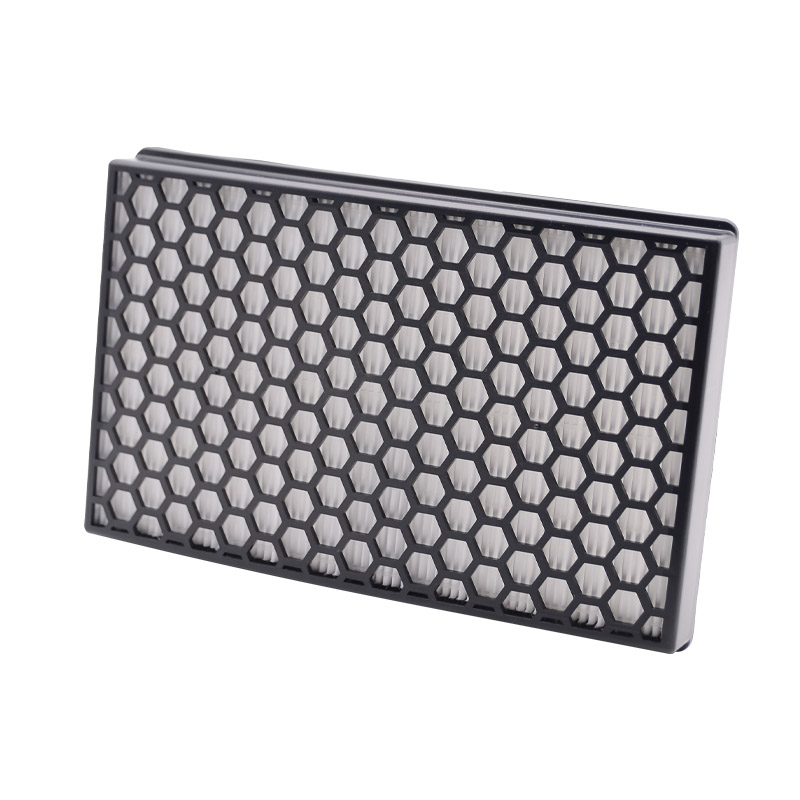
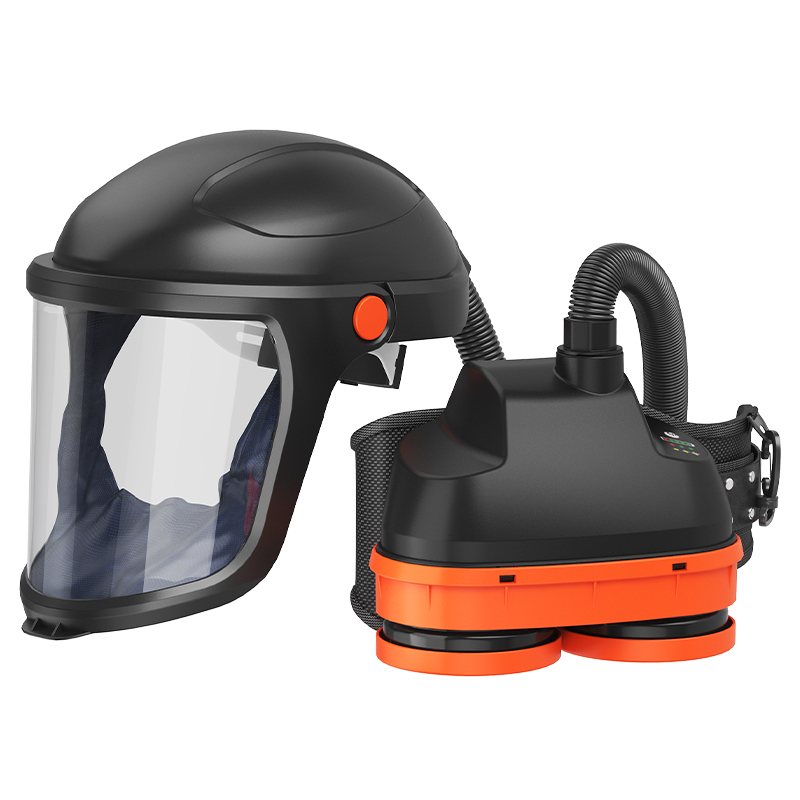
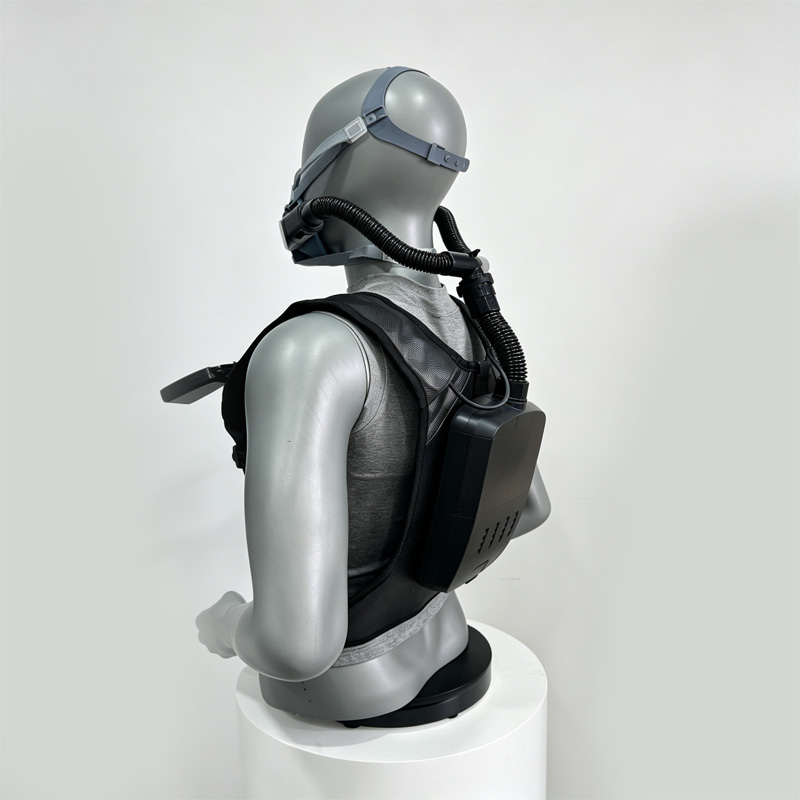
    The BXH-3003 is the latest PAPR from NEW AIR .It serves as the core blower unit of a high-performance Powered Air-Purifying Respirator , a professional personal respiratory protection system engineered for use in high-risk environments such as industrial operations and contaminated work sites. As the power heart of the entire system, this PAPR actively draws in ambient air, purifies it through multi-stage filtration, and delivers a continuous stream of clean, positive-pressure airflow to the user’s facepiece. This positive pressure acts as a critical barrier, preventing contaminants from entering the breathing zone and establishing a robust, reliable line of defense for the user. A key advantage of this air papr blower lies in its powerful and stable airflow performance. It features three adjustable airflow levels, reaching a maximum of 130 L/min, which adapts to different work intensities and ensures consistent positive pressure inside the facepiece—even during periods of heavy breathing—to guarantee uncompromised protection. Furthermore, the blower operates at a noise level below 65 dB, eliminating auditory distractions and significantly enhancing user comfort and focus during long shifts. Its core motor boasts a service life of over 50,000 hours, built to withstand the rigors of frequent, heavy-duty industrial use and reduce long-term replacement costs.   The BXH-3003 PAPR is equipped with a scientifically designed, high-efficiency multi-stage filtration system that provides layered protection for clean air. Air first passes through a spark arrester and optional pre-filter media to capture large particulate matter. It can then be paired with an optional carbon pre-filter to adsorb odors and certain organic vapors, before undergoing final purification by a HEPA filter with a filtration efficiency of 99.97%, meeting the TM3 filter grade. This modular filtration structure not only simplifies maintenance and replacement but also allows the entire PAPR system to adapt flexibly to diverse work environments, offering reliable protection against dust, fumes, and microbial aerosols.   In terms of power and runtime, the BXH-3003 PAPR is powered by a dedicated 3400mAh (25.16Wh) lithium battery, providing ample endurance for extended work periods. Depending on the airflow setting, operating times reach 11 hours, 9 hours, and 7 hours respectively, fully covering a complete single work shift. The battery operates at a rated voltage of 7.4V, charges in just 2.5 hours, and supports over 500 charge-discharge cycles for excellent durability. Additionally, the unit features a comprehensive system alarm function: in the event of low battery power or a clogged filter (low airflow), both audible and visual alerts (flashing red light) activate, promptly notifying the user to replace the filter or recharge the battery and preventing loss of protection due to equipment failure. The design of the BXH-3003 PAPR prioritizes practicality and portability for industrial use. The main unit weighs only 542±10g without the battery, and just 720±10g with the battery installed. When paired with the dedicated harness and breathing hose, it adds minimal physical burden to the user. With compact dimensions of 237×158×48mm, the blower is easy to store and transport. The system’s modular design allows for quick, tool-free removal and replacement of the front cover, filters, battery, and other components, greatly improving on-site maintenance efficiency and ensuring the papr respirator system is always ready for use.   As the central unit of the entire PAPR system, the BXH-3003 blower is not merely the power source for air purification—it is a reliable safeguard for the user’s ability to breathe safely. It perfectly combines powerful airflow performance, high-efficiency multi-stage filtration, stable battery life, and user-centric design, delivering a professional-grade respiratory protection solution for a wide range of scenarios including industrial manufacturing, construction, and healthcare. With the BXH-3003 PAPR, users can work confidently in high-contamination environments without worrying about the risk of contaminant exposure.If you want know more, please click www.newairsafety.com.
    Read More
  • Why Woodworkers Need a PAPR
    Why Woodworkers Need a PAPR
    Dec 15, 2025
      When people think of woodworking, images of flying wood shavings and the rich aroma of wood often come to mind. Yet few pay attention to the invisible "health killers"—wood dust. Many craftsmen are used to wearing regular masks while working, thinking, "As long as the large particles are blocked, it’s fine." But with the increasing awareness of occupational health, more and more practitioners are turning to papr system. Today, let’s explore why woodworking, a seemingly "down-to-earth" craft, requires such "professional-grade" protective equipment.   First, it’s crucial to understand: the hazards of wood dust are far greater than you might imagine. Wood processing generates not only visible wood chips but also a large amount of inhalable particles (PM2.5). These tiny particles can penetrate deep into the respiratory tract, and long-term accumulation may lead to occupational diseases such as pneumoconiosis and bronchitis. What’s more troublesome is that dust from some hardwoods (such as rosewood and oak) contains allergenic components, which can cause skin itching and asthma attacks upon contact. Regular masks either have insufficient filtration efficiency or poor sealing—dust can easily seep through gaps around the nose and chin, greatly reducing their protective effect. The core advantage of a positive air purifying respirator lies in its "active protection + high-efficiency filtration": it actively draws in air through a built-in fan, filters it through a HEPA filter, and then delivers the clean air to the mask, blocking dust intrusion at the source.   The complexity of woodworking scenarios further highlights the irreplaceability of PAPRs. Woodworkers handle a variety of tasks, from sawing and planing to sanding and finishing. Each process produces different pollutants: sawing hardwood generates a lot of sharp wood chips, sanding creates ultra-fine dust, and finishing may be accompanied by volatile organic compounds (VOCs). Regular masks are often helpless against such "composite pollution," but PAPRs can be fitted with different filters according to different processes—they not only filter dust but also provide protection against gaseous pollutants like VOCs. More importantly, woodworking operations often require frequent bending over and turning around, which can easily shift regular masks. PAPR masks, however, are designed to fit closely to the face and are secured with headbands or safety helmets. Even when bending over to sand a tabletop or tilting the head to cut wood for long periods, they maintain a good seal.   Comfort during long hours of work is a key reason why PAPRs are gaining popularity among woodworkers. It’s common for woodworkers to work more than 8 hours a day. Regular masks, especially high-protection ones like N95s, have poor breathability. Wearing them for a long time can cause chest tightness, shortness of breath, and leave marks on the face. PAPRs, on the other hand, maintain a slight positive pressure inside the mask through continuous active air supply, making breathing smoother and effectively reducing stuffiness.   Some may think powered respirators are more expensive than regular masks and offer poor cost-effectiveness. But from the perspective of long-term health costs, this investment is definitely worthwhile. The treatment costs for occupational diseases like pneumoconiosis are high, and once contracted, they are difficult to cure, seriously affecting quality of life and work capacity. A reliable PAPR can be used for a long time as long as the filter is replaced regularly. It not only protects your health but also avoids lost work time due to illness. For professional woodworking studios, providing PAPRs for employees is also a manifestation of corporate responsibility, which can enhance team cohesion and work safety.   Woodworking is a craft that requires patience and ingenuity. Protecting your health is essential to better inherit this craft. Regular masks may be sufficient for short-term, light dust environments, but for long-term, complex woodworking operations, the high-efficiency protection, comfort, and health security provided by PAPRs are irreplaceable by ordinary protective equipment. Don’t let "being used to it" or "it’s okay" become hidden threats to your health. Add a PAPR to your woodworking bench, and make every planing and sanding session more reassuring.If you want know more, please click www.newairsafety.com.
    Read More
  • PAPR Cartridge for Automotive Painting: A2P3 Is Best
    PAPR Cartridge for Automotive Painting: A2P3 Is Best
    Dec 12, 2025
      In automotive painting, the gloss and smoothness of the paint finish are the core process goals, but the potential pollutant risks deserve more attention. From rust removal with primer, color application with base coat to sealing with clear coat, the entire process generates dual pollution: on one hand, paint mist particles with a diameter of 0.1-5 microns, which can be directly inhaled and deposited in the lungs; on the other hand, organic vapors volatilized from paint solvents, such as toluene, xylene, ethyl acetate and other Volatile Organic Compounds (VOCs), which not only have a pungent odor but also may damage the nervous and respiratory systems with long-term exposure. Ordinary dust masks can only block large particles, while activated carbon masks have limited adsorption capacity and are prone to saturation. Only toxic gas cartridges, with their targeted filtration design, can simultaneously block particles and organic vapors, serving as the "core line of defense" for automotive painting protection. Today, we will break down why toxic gas cartridges are a must for automotive painting and whether the popular A2P3 cartridge is truly suitable.   The "composite pollution" characteristic of automotive painting determines that toxic gas cartridges are not an "optional piece of equipment" but a "necessary configuration"—especially when paired with a battery powered air respirator (PAPR). Firstly, the synergistic hazards of paint mist particles and organic vapors are far greater than single pollution—fine particles act as "carriers" for organic vapors, penetrating deeper into the respiratory tract and intensifying toxic infiltration. Ordinary protective equipment cannot handle both: single-layer dust masks have no blocking effect on organic vapors, while pure organic vapor filter boxes will be clogged by paint mist, leading to a sharp drop in filtration efficiency. Secondly, the continuity of painting operations requires stable and durable protective equipment. Toxic gas cartridges adopt a dual-layer structure of "particle pre-filtration + chemical adsorption": paint mist is first intercepted by the pre-filtration layer to avoid clogging the adsorption layer, and activated carbon and other adsorbent materials efficiently capture organic vapors, ensuring stable protection during hours of continuous operation when used with a PAPR. More importantly, compliant toxic gas cartridges must pass professional certifications , with their filtration efficiency and protection range strictly tested to meet the safety and compliance requirements of painting scenarios.   The core logic for selecting the right toxic gas cartridge is to "accurately match the type and concentration of pollution", which requires first understanding the model coding rules of toxic gas cartridges. The model of a toxic gas cartridge usually consists of "protection type code + protection level". For example, the common "Class A" stands for organic vapor protection, "Class P" for particle protection, and the number after the letter represents the protection level (the higher the number, the higher the level). The core pollution in automotive painting is "organic vapor + paint mist particles", so the selection must focus on composite protection types that cover both "organic vapor + particles" rather than single-function cartridges. Combining industry practice and pollution characteristics, the A2P3 cartridge is precisely the core model most suitable for automotive painting. In addition, flexible adjustments are needed: for high-concentration scenarios such as closed spray booths, upgrade to A3P3; for water-based paint spraying, since the paint mist particles are finer, ensure P3 level, but the basic composite protection framework still takes A2P3 as the benchmark. Blindly choosing single-type or low-level toxic gas cartridges is equivalent to "passive exposure" to pollution risks.   As the "golden-matched model" for automotive painting—especially when used with a papr respirator system—the adaptability of the A2P3 cartridge stems from its precise matching to painting pollution. Let's first analyze the core value of the model: "A2" is for medium-concentration organic vapor protection (common painting solvents such as toluene, xylene, and ethyl acetate all have boiling points higher than 65°C, fully covering the protection range of A2), and "P3" achieves high-efficiency particle interception (filtration efficiency ≥99.95%, with nearly 100% interception rate for 0.1-5 micron paint mist particles). In terms of scenario adaptability, whether it is local touch-up painting in auto repair shops, whole-vehicle painting in small spray workshops, or general operations with mainstream oil-based or water-based paints, the concentration of organic vapor is mostly at a medium level, and the diameter of paint mist particles is concentrated at 0.3-5 microns, which perfectly matches the protection parameters of A2P3 and the air supply capacity of a standard PAPR. In practical application, its dual-layer structure of "pre-filtration layer + high-efficiency adsorption layer" can first intercept paint mist to avoid clogging the adsorption layer, extending the continuous service life to 4-8 hours, which fully meets the daily painting work duration. The only exception: when spraying high-concentration special solvent-based paints (such as imported high-solids metallic paints) or continuous operation in fully enclosed spaces, upgrade to A3P3, but A2P3 remains the best choice for over 90% of conventional painting scenarios when paired with a PAPR.   After selecting the core model A2P3, correct usage is essential to maximize protection value. Three key details require focus: first, matching supporting equipment—must be used with a personal air purifying respirator or airtight gas mask, and pass an airtightness test to ensure no gap leakage, avoiding "qualified cartridge but failed protection"; second, establishing a saturation early warning mechanism—when a solvent odor is smelled or breathing resistance increases significantly, replace immediately even if the theoretical service life is not reached. The continuous use limit of A2P3 under medium concentration is usually no more than 8 hours; third, standardizing storage and maintenance—the shelf life of unopened A2P3 is 3 years; after opening, if not used, it should be sealed and stored for no more than 30 days, keeping it away from moisture and direct sunlight to prevent adsorption performance degradation. In conclusion, the core of automotive painting protection is "accurate matching of composite pollution". With its precise protection combination of "organic vapor + high-efficiency particles", the A2P3 cartridge becomes the most suitable model for most scenarios. Based on A2P3 and flexibly upgrading according to scenario concentration, the toxic gas cartridge can truly become a "health shield" for painting practitioners.If you want know more, please click www.newairsafety.com.
    Read More

  • Experience Laser Safety with ADF Laser Welding Helmet and PAPR
    Experience Laser Safety with  ADF Laser Welding Helmet and PAPR
    Sep 08, 2025
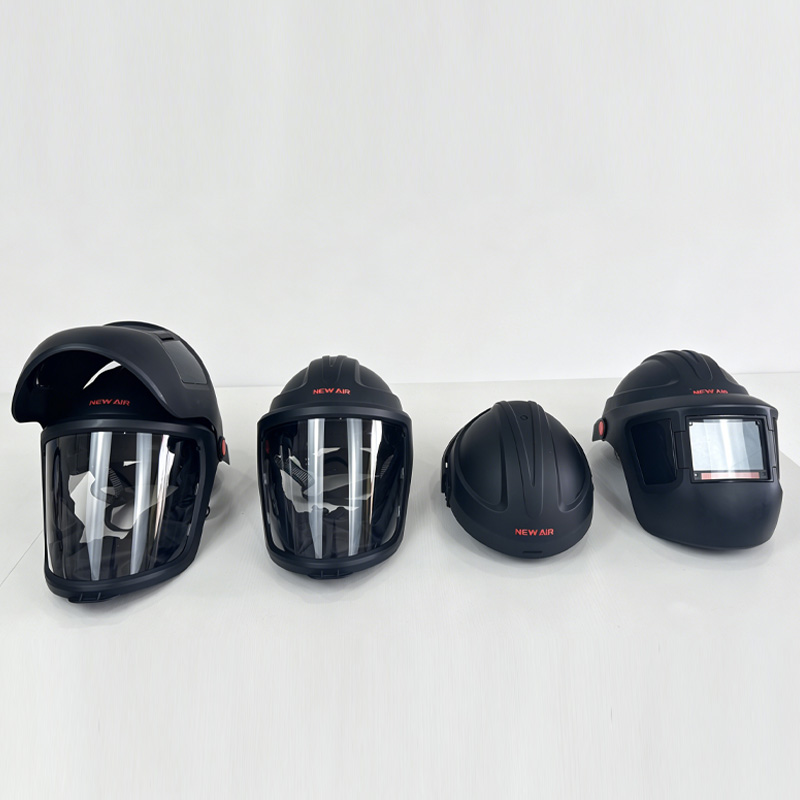
    When it comes to laser - related work, safety is always the top priority. Today, I want to share with you the NEW AIR laser protective helmet (automatic dimming version ADF) and the PAPR (Powered Air - Purifying Respirator) that works in tandem with it, which are excellent choices for ensuring safety in laser operations.   The ADF helmet is specifically designed for laser safety protection. Its main protection wavelength range is 950 - 1100nm, perfectly matching the 950 - 1100nm fiber laser commonly used in many laser applications. Made of PP and PC materials, it is not only durable but also provides reliable protection. The automatic dimming feature is a highlight. In the dark state, it can adjust to DIN4/5 - 8/9 - 13, and the PC absorbing laser window offers a light density of OD8+ for the 950 - 1100nm range, effectively shielding the eyes and face from harmful laser radiation during laser handheld welding.   Now, let's talk about PAPR. A PAPR is a powered air - purifying respirator that supplies filtered air to the wearer. When used together with the ADF helmet, it forms a comprehensive protection system. While the helmet protects the eyes and face from laser damage, the PAPR ensures that the respiratory system is safeguarded from any fumes, particles, or harmful gases that may be generated during laser operations. This combination is especially crucial in environments where there are potential respiratory hazards along with laser risks.   In summary, the ADF laser protective helmet, with its precise laser protection parameters, and the powered air purifying respirator helmet, which addresses respiratory safety, together create a safer working environment for those engaged in laser - related tasks. Whether you are a professional in laser manufacturing or research, this safety combination is definitely worth considering.If you want know more, please click www.newairsafety.com.
    Read More

leave a message

leave a message
If you are interested in our products and want to know more details,please leave a message here,we will reply you as soon as we can.
submit
Contact Us: sales@txhyfh.com

home

products

WhatsApp

Contact us