inquiry
Leave A Message
If you are interested in our products and want to know more details,please leave a message here,we will reply you as soon as we can.
submit
Bengbu Longkai Welding Protection Technology Co.,Ltd.
Home

papr powered air purifying respirators

papr powered air purifying respirators

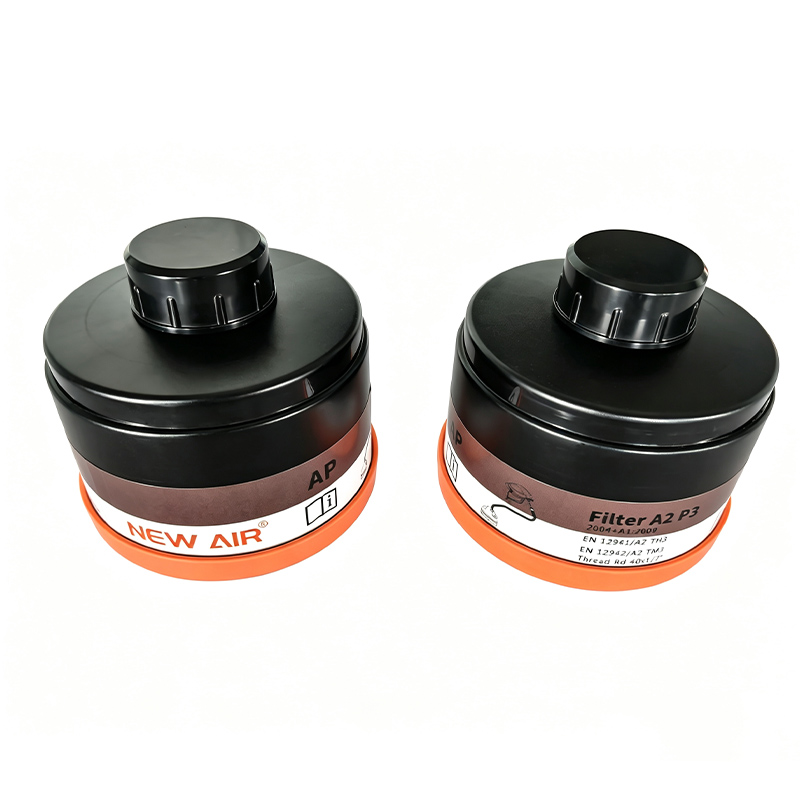
  • A2P3 Filter for NEW AIR BXH‑3002 PAPR Spray Painting
    A2P3 Filter for NEW AIR BXH‑3002 PAPR Spray Painting
    Sep 15, 2026
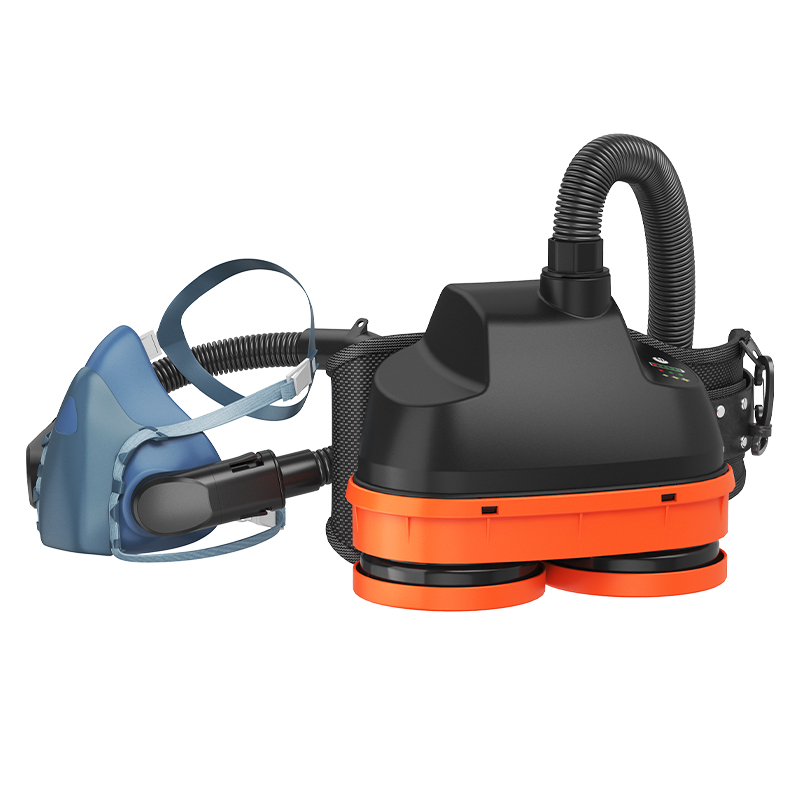
    Workers performing spray painting, adhesive application and chemical processing are exposed to two major respiratory hazards: harmful organic vapours and fine airborne particles. Standard particulate filters can only trap dust and aerosols, but cannot block toxic solvent fumes. The NEW AIR A2P3 combined filter cartridge is the matching filter for the BXH‑3002 Powered Air Purifying Respirator (PAPR). Purpose-built for spray applications, it delivers dual protection against organic vapours and particulate matter. The A2 class protects against organic vapours with boiling points above 65°C, such as paint solvents, thinners and fumes released by adhesives. The P3 filter layer captures solid and liquid aerosols including paint mist, grinding dust and smoke. When fitted to the BXH‑3002 respirator air purifying, the A2P3 cartridge first adsorbs organic gases via its activated carbon layer, then traps tiny droplets and particles with high-efficiency filter media. This two-stage purification continuously supplies clean airflow into the visor, offering reliable respiratory protection for spray operators.   The A2P3 filter cartridge acts as the core accessory when the BXH‑3002 respirator is used for solvent-based paint spraying. In coating workshops, paint mist floats in the air alongside evaporated solvent vapours. Using a standalone P3 particulate filter here creates significant safety risks, as it cannot remove solvent vapours. Equipped with the A2P3 filter, the BXH‑3002 can defend against both paint mist and organic vapours. It is widely used for automotive refinishing, furniture spraying and other solvent coating operations.   Despite its strong filtration performance, users need to understand its limitations. The A2P3 filter for BXH‑3002 only protects against organic vapours. It does NOT protect against acid gases, ammonia or other inorganic toxic gases. It is not recommended for spraying 2K polyurethane paints containing isocyanates, which require a higher level of respiratory protection. The service life of the filter cartridge depends on onsite chemical concentration, humidity and working hours. Regular replacement is mandatory. Great compatibility is another advantage of the BXH‑3002 system. The A2P3 filter cartridge adopts a standard threaded connection. It can be quickly mounted onto the BXH‑3002 main unit or swapped out for a P3 particulate filter as needed. Operators can easily switch filter types: use the P3 filter for welding and grinding, then fit the A2P3 combined cartridge for coating work. There is no need to replace the whole respirator. One main unit adapts to multiple working scenarios, cutting equipment costs and improving workshop productivity.   NEW AIR specialises in developing reliable respiratory protection solutions. Paired with the original A2P3 filter cartridge, the BXH‑3002 loose fitting powered air purifying respirator is manufactured and tested in compliance with relevant EN standards, delivering stable dual protection against gases and particulates for spray booths. We supply the complete BXH‑3002 PAPR system, replacement filter cartridges and supporting accessories to meet diverse demands from welding, grinding and spray coating industries. Every product is engineered to safeguard workers’ respiratory safety in harsh workshop environments. If you want know more, please click www.newairsafety.com.
    Read More
  • Why Do PAPRs Require IP Ratings?
    Why Do PAPRs Require IP Ratings?
    Nov 15, 2025
      In scenarios such as spray cleaning in chemical workshops, dusty environments of mine excavation, and rainy or snowy weather during outdoor electrical maintenance, positive pressure powered respirator have always been the "respiratory barrier" for workers. However, while many people focus on the filtration efficiency and battery life of PAPRs, they often overlook a key indicator — IP rating. As a core standard for measuring the dust and water resistance performance of electrical equipment, the IP rating directly determines the reliability of PAPRs in complex environments. Why is the IP rating so important for PAPRs? This requires in-depth analysis from the perspectives of its working principle, application scenarios, and protection requirements for core components.   First of all, it is necessary to clarify that the IP rating is not a dispensable "additional attribute" but a prerequisite for papr powered air purifying respirators to achieve basic protection functions. The IP rating consists of the prefix "IP" followed by two digits: the first digit represents the dust resistance level (0-6), with a higher number indicating stronger dust resistance; the second digit represents the water resistance level (0-8), with a higher level indicating better water resistance. The core power components of PAPRs are motors and fans, and the filtration system relies on a sealed structure to ensure efficiency. Dust and water are the "natural enemies" of these components. Without corresponding IP rating protection, dust will invade the motor bearings, causing wear and jamming, and water may cause short circuits in the circuit, leading to equipment shutdown. This ultimately directly undermines the continuity of respiratory protection — which will undoubtedly pose a life-threatening risk to users in toxic and harmful environments.   The harsh environments of different application scenarios directly force PAPRs to have matching IP ratings. In heavy dust scenarios such as coal mining and cement production, the concentration of suspended particles in the air can reach hundreds of milligrams per cubic meter. If the dust resistance level of the PAPR is insufficient (e.g., lower than IP6X), dust will enter the interior through equipment gaps, which not only clogs the filter cotton and accelerates its wear but also adheres to the motor rotor, leading to a sharp drop in air supply efficiency. In scenarios such as chemical spraying and outdoor emergency rescue, liquid splashing or rain and snow intrusion is inevitable, and the water resistance level becomes crucial at this time: if it only reaches IPX3 (protection against splashing water), it may enter water and short-circuit when facing high-pressure spraying; while protection above IPX5 (protection against jetting water) can ensure the normal operation of the equipment in complex water environments.   The IP rating is also directly related to the service life and maintenance cost of PAPRs, and is an important consideration for the cost-effectiveness of enterprise safety investments. PAPRs with high IP ratings adopt special designs such as sealing rings and waterproof connectors on their casings, which can effectively prevent dust and water from invading core components.   In summary, the IP rating is the core guarantee for powered air purifying device to "stand firm" in complex environments, which is not only related to the life safety of users but also affects the operational efficiency of enterprises. When selecting models, it is necessary to accurately match them with specific scenarios: for heavy dust environments, prioritize the IP6X dust resistance level; for liquid contact scenarios, focus on the water resistance level of IPX4 or above; for outdoor multi-environment scenarios, it is recommended to choose a comprehensive protection level of IP65 or above. At the same time, it should be noted that a higher IP rating is not always better. It is necessary to balance protection needs with equipment performance such as weight and battery life — after all, protection suitable for the scenario is the most effective protection. Attaching importance to the IP rating of PAPRs is essentially attaching importance to the safety baseline of every worker.If you want know more, please click www.newairsafety.com.
    Read More
  • A, B, E, K Series: "Exclusive Guards" for Gas Vapor Protection
    A, B, E, K Series: "Exclusive Guards" for Gas Vapor Protection
    Aug 19, 2025
    The letters A, B, E, and K represent different types of gases/vapors, while the numbers 1, 2, and 3 after them indicate increasing protection levels. The higher the number, the stronger the protection capacity (adsorption capacity), the higher the applicable pollutant concentration, and the better the resistance to environmental conditions (such as humidity), all of which are vital for the effectiveness of a Powered Air-Purifying Respirator. ​   A Series (Organic Gases/Vapors)​   The A series mainly targets organic gases and vapors, including substances such as benzene, gasoline, and acetone.​ A1: As the basic protection level, it is applicable to low-to-moderate concentration organic vapors when used in a Powered Air-Purifying Respirator.​ A2: With a higher protection level, the test concentration is usually more than 5 times that of A1, and it can function in high-humidity environments, such as painting workshops with high humidity and high concentrations of organic vapors, making it a suitable choice for a powered air purifying respirator welding in such settings.​ A3: Specifically designed for low-boiling organic vapors with a boiling point <65℃. Due to the extremely strong volatility of such gases, ordinary activated carbon has poor adsorption effects. A3 filter media use special adsorbents, providing more targeted protection in a Powered Air-Purifying Respirator.​   B Series (Inorganic Gases/Vapors)​   The B series mainly protects against inorganic gases and vapors, such as chlorine, sulfur dioxide, phosgene and other highly oxidizing or irritating inorganic gases.​ B1: The basic protection level, applicable to the protection of low-to-moderate concentration inorganic gases, such as small chlorine leaks in laboratories, when used in a powered air welding helmets.​ B2: With upgraded protection capability, it is applicable to medium-to-high concentration inorganic gases. The test concentration is more than 5 times that of B1, and it can pass high-humidity tests, performing well in scenarios such as leaks of high-concentration chlorine and sulfur dioxide in chemical production when used in a Powered Air-Purifying Respirator.​ B3: Targeting high-concentration or special inorganic gases, such as high-concentration phosgene and chlorine fluoride, it has higher requirements for protection capacity and chemical stability, usually used in extreme industrial scenarios with a Powered Air-Purifying Respirator.​   E Series (Acidic Gases/Vapors)​   The E series mainly deals with acidic gases and vapors, including hydrochloric acid, hydrogen fluoride, hydrogen sulfide, etc.​ E1: The basic protection level, which can be used for the protection of low-concentration acidic gases in a Powered Air-Purifying Respirator.​ E2: With a higher protection level than E1, it is applicable to medium-to-high concentration acidic gases and can effectively protect in high-humidity environments, such as pickling workshops and high-humidity + high-concentration acid mist environments near electroplating tanks, when used in a powered hood respirator .​ E3: Targeting high-concentration strong acidic gases, such as concentrated nitric acid vapor and high-concentration hydrogen fluoride, the filter media contain a higher amount of alkaline adsorbents (such as potassium hydroxide) with larger reaction capacity, applicable to strongly corrosive chemical environments with a positive pressure powered respirator.​   K Series (Ammonia and Amine Gases/Vapors)​   The K series mainly protects against ammonia and amine gases/vapors, such as ammonia, methylamine, ethylamine and other alkaline gases.​ K1: The basic protection level, applicable to the protection of low-to-moderate concentration ammonia or amine gases in a papr fitting.​ K2: With a higher protection level, it is applicable to medium-to-high concentration ammonia or amine gases and can effectively adsorb in high-humidity environments, such as fertilizer factories and humid environments with ammonia leaks in cold storage, when used in a purifying respirator.​ K3: Targeting high-concentration amines or mixed amine gases, the adsorbent has stronger specific adsorption capacity for amines, applicable to amine synthesis scenarios in fine chemicals with a Powered Air-Purifying Respirator.​ III. The "Golden Rule" for Selecting Respiratory Protection Filter Media​ When actually selecting respiratory protection filter media, especially for a Powered Air-Purifying Respirator, we need to comprehensively consider the type of pollutants in the working environment (whether particulates or gases/vapors), concentration, and environmental conditions (such as humidity). For example, in a high-concentration organic vapor environment with high humidity, A2 is a more suitable choice for the filter in a Powered Air-Purifying Respirator; for low-boiling organic gases, A3 should be selected. Only by choosing filter media that match the scenario can we truly ensure our respiratory safety when using a Powered Air-Purifying Respirator. ​ These seemingly complex labels are actually "compasses" for protecting our respiratory health, particularly when using equipment like the Powered Air-Purifying Respirator. For more details about our products, please visit www.newairsafety.com.
    Read More

leave a message

leave a message
If you are interested in our products and want to know more details,please leave a message here,we will reply you as soon as we can.
submit
Contact Us: sales@txhyfh.com

home

products

WhatsApp

Contact us