inquiry
Leave A Message
If you are interested in our products and want to know more details,please leave a message here,we will reply you as soon as we can.
submit
Bengbu Longkai Welding Protection Technology Co.,Ltd.
Home

Powered Air Respirator System

Powered Air Respirator System

  • PAPR and SCBA: What’s the Difference
    PAPR and SCBA: What’s the Difference
    Sep 30, 2026
    In high-risk work environments such as industrial operations, fire rescue and disinfection tasks, respiratory protective equipment is critical to safeguarding workers’ lives. powered face shield respirator (PAPR) and Self-Contained Breathing Apparatus (SCBA) are two of the most widely used professional protective devices. Many industry practitioners tend to confuse their applicable scenarios and protection capabilities. In fact, they differ greatly in working principles, protection levels and operating conditions. A clear understanding of their differences helps companies and workers select the right equipment, ensuring safety while improving work efficiency and controlling protection costs. The fundamental distinction between PAPR and SCBA lies in their operating principles and air supply methods. Powered air purifying respirator is an air-purifying respirator. Its built-in electric fan actively draws ambient air and filters out contaminants such as dust, organic vapors and aerosols through multi-layer filter cartridges, then delivers clean air to the facepiece or hood. It relies entirely on the surrounding atmosphere. SCBA, by contrast, is an atmosphere-supplying respirator. It does not depend on outside air. Clean breathing air is supplied from a high-pressure compressed air cylinder worn on the back. The wearer breathes air from the self-contained tank, fully isolated from contaminated ambient air.   Protection performance and suitable applications form the core criteria for equipment selection. SCBA delivers the highest level of protection, far exceeding PAPR. It can be used in IDLH (Immediately Dangerous to Life or Health) atmospheres, oxygen-deficient environments, high-concentration toxic gas leaks and unknown hazardous air conditions. It is standard equipment for fire fighting, chemical spill response and confined space rescue. However, its limitation is air capacity. Typical cylinders only support 30 to 90 minutes of operation, making it unsuitable for extended continuous work. PAPR offers moderate protection and is only used when ambient oxygen levels are sufficient and contaminant concentrations are controlled. Common use cases include industrial grinding, spray painting, welding and routine disinfection. While it cannot handle oxygen-poor or highly toxic emergency scenarios, it enables long-duration work as long as the battery remains charged and filters are intact.   When it comes to wearer comfort, equipment weight and running costs, these two devices also show obvious gaps. SCBA is fitted with a high-pressure cylinder and pressure reducing components, making it bulky and heavy. The backpack design restricts body movement, and users easily get fatigued after prolonged wear. Cylinder refilling, annual inspections and maintenance also add up to high operating costs, with relatively complex operation procedures. PAPR adopts a lightweight modular design, most available in waist-mounted or slim backpack formats. The forced air circulation keeps the hood ventilated and reduces heat buildup, lowering operator fatigue. There is no need for air refilling; users only replace filters periodically. Simple maintenance and lower recurring costs make PAPR ideal for regular, long-hour industrial work. Overall, PAPR and SCBA are not substitutes for each other. Instead, they complement one another for different protection requirements. As a simple rule of thumb: SCBA must be deployed for high-risk, oxygen-deficient and unknown hazard emergency rescue operations to guarantee absolute safety. PAPR is preferred for regular industrial dust and vapor exposure where long continuous working time is needed, balancing protection and practicality. Most enterprises maintain both types of equipment in their safety setup, building a full respiratory protection system covering daily operations and emergency response to mitigate workplace hazards.   NEW AIR is a professional safety gear brand focusing on the research, development and manufacturing of PAPR solutions for respiratory protection. The brand addresses common pain points in industrial respiratory safety, offering a lineup of lightweight, well-adapted powered air-purifying respirators. Its core models including BXH-3001, BXH-3002 and BXH-3003 feature a modular filter structure, which can protect users against industrial dust, welding fumes, paint organic vapors and other pollutants. With reliable engineering and product quality,  It delivers cost-effective, professional respiratory protection solutions for industrial enterprises and stands as a trusted choice for routine industrial respiratory protection.If you want know more, please click www.newairsafety.com.
    Read More
  • Why Test PAPR Inward Leakage When Powered Off?
    Why Test PAPR Inward Leakage When Powered Off?
    Sep 11, 2026
    PAPR, or Powered Air-Purifying Respirator, relies on its built-in blower to deliver filtered, clean air into a headpiece or face mask. It is a critical piece of personal protective equipment for work environments with industrial dust and hazardous particulate matter. Many users assume that protection is guaranteed as long as the blower runs normally. However, for PAPR systems paired with tight-fitting headpieces, inward leakage testing under power-off conditions is an indispensable part of full system validation. When the purifying respirator blower operates normally, it maintains positive pressure inside the headpiece. This positive pressure blocks external contaminants from seeping through gaps between the face seal and skin, which forms the core protective mechanism of a PAPR. If the blower unexpectedly loses power, the battery drains completely, or the unit malfunctions, this internal positive pressure disappears instantly. Without continuous airflow supporting the tight-fitting headpiece, harmful aerosols and dust from the surrounding environment can penetrate through the seal interface. At this point, the inward leakage rate directly determines the level of exposure risk for the wearer the moment the unit shuts down.   A common misconception among users is that a tight-fitting headpiece, which seals firmly against the face, will perform like a conventional negative-pressure gas mask even after the blower stops. But these two designs serve fundamentally different purposes. The sealing structure of a respiratory papr tight-fitting headpiece is engineered primarily to work with internal positive pressure; it is not independently designed to meet the sealing requirements of negative-pressure respirators. When the blower stops, the wearer's breathing creates negative pressure inside the headpiece, drawing environmental contaminants into the seal gaps. Without power-off inward leakage testing, we cannot quantify what proportion of pollutants will enter the headpiece when the equipment fails.   Sudden PAPR power loss is not a rare edge case in real-world operations. Long-duration work can deplete batteries, loose wiring or physical impact can all cause the blower to shut down without warning. In high-risk sites such as chemical plants, pharmaceutical facilities and heavy metal dust workshops, workers cannot evacuate immediately after a shutdown. They often need several seconds to tens of seconds to secure their work and exit the hazard zone. Power-off inward leakage testing simulates this high-risk scenario, evaluating how much residual protection the headpiece provides during blower failure and verifying whether the equipment meets on-site safety requirements. For compliance and equipment selection, power-off inward leakage data is essential for risk assessment. Relevant respiratory protection standards require performance evaluation under fault conditions, in addition to testing protection during normal air supply. This test helps compare sealing performance across different headpiece models and identify sealing defects, such as insufficient headband tension or deformed face seals. The data also supports enterprises in developing emergency protocols, defining the maximum allowable evacuation window after PAPR shutdown and clarifying emergency response procedures for staff.   In summary, powered face mask respirator protection depends on positive pressure generated by blower airflow. Power-off inward leakage testing essentially acts as a failure contingency test for protective gear. It does not assess performance under normal operation; instead, it verifies the fallback protection capacity during equipment failure. Only by confirming that inward leakage remains controllable when power is lost can we fully understand the true protection limits of the complete PAPR system, preventing hidden health hazards for field operators caused by sudden blower failure. If you want know more, please click www.newairsafety.com.
    Read More
  • Why All NEW AIR PAPR Units Choose RILSA NB1024 for Certification?
    Why All NEW AIR PAPR Units Choose RILSA NB1024 for Certification?
    Jun 25, 2026
    As EU PPE regulations keep tightening and the updated EN12941:2023 & EN12942:2023 standards come into full force, the compliance threshold for powered air-purifying respirators (PAPR) exported to Europe has risen significantly. There are countless notified bodies across the EU with huge gaps in certification validity and testing capacity. Many manufacturers frequently face troubles including questioned certificates, suspended annual surveillance and customs detention.   As a professional manufacturer of papr air purifier protection equipment, NEW AIR sends our full product range to RILSA (Notified Body NB1024, Czech Republic) for certification consistently, without switching to other certification bodies. Our overseas customers also widely recognize CE certificates issued by NB1024. This consistent choice stems from five irreplaceable core strengths listed below. 1. Comprehensive Specialized RPD Qualifications to Prevent Certificate Invalidation   Registered in the EU NANDO database, RILSA NB1024 holds full official authorization for respiratory protective devices (RPD) under Regulation (EU) 2016/425. It is fully accredited to issue certificates against both core PAPR standards EN12941 and EN12942, with no risk of out-of-scope certification. RILSA runs its own ISO 17025 accredited laboratory No.1040. All mandatory tests for best papr respirator – total inward leakage, airflow stability, filter penetration, high-low temperature durability and more – are completed in-house without outsourcing to third-party labs. All test data is complete and fully traceable.   As a notified body qualified for full conformity assessment of Category III high-risk PPE, RILSA delivers Module B type examination plus Module C2 annual surveillance as a complete package. Most small notified bodies can only offer Module B testing without follow-up surveillance, which easily leads to expired or invalid certificates. This full-service model perfectly matches NEW AIR’s long-term mass export demands.   2. Endorsed by Industry Benchmark Brands, Highly Recognized by Buyers   Leading European welding equipment manufacturers and top local PPE brands have long relied on RILSA for PAPR certification, building outstanding industry credibility through thousands of successful projects.   Many overseas distributors and PPE purchasers explicitly require suppliers to provide products certified by RILSA. In buyers’ eyes, the NB1024 number is a symbol of rigorous, authoritative performance verification for respiratory protection. When comparing identical PAPR products, NEW AIR respirators carrying NB1024 certificates pass customer qualification reviews much faster and secure large-volume purchase orders, granting us a distinct competitive edge in global markets.   3. Smooth Customs Clearance & Stable Market Surveillance, Low Risk of Certificate Suspension or Revocation   RILSA is a state-owned national occupational safety research institute in the Czech Republic, not a purely commercial private certification body. It enjoys high credibility with EU customs authorities and market surveillance agencies across all member states.   Shipments with NB1024 certificates face far lower inspection rates at EU borders, avoiding extra detention fees and delivery delays caused by questioned certification credentials. In the event of random EU market surveillance audits, RILSA can supply full original test records with complete data trails. Cases of certificate suspension, revocation or forced product withdrawal are extremely rare, drastically cutting compliance risks for NEW AIR’s large-scale shipments.   4. Full Certification Capacity for EN12941:2023 & EN12942:2023 to Secure Long-Term Compliance   The latest standard revisions introduced stricter mandatory test items, including mercury and NOx filter performance, unified total inward leakage assessment, battery safety and extreme temperature cycling durability. RILSA participated in the drafting of EU respiratory protection standards and completed full capability expansion for both updated 2023 standards well in advance. It can certify NEW AIR’s core welding helmet-style PAPR as well as tight-fitting full/half mask PAPR for chemical applications. New product certification and legacy certificate upgrades can be processed in one stop, eliminating repeated testing fees and the hassle of switching notified bodies to maintain market access.   5. One-Stop Certification Service Aligned with Mass Production & Export Cycles   RILSA maintains mature, streamlined communication channels for Chinese papr respirators manufacturers. Its technical team is familiar with integrated welding PAPR structures, composite filter media and blower modules made in China, delivering practical, efficient corrective action guidance when adjustments are needed.   The full Module B + C2 certification timeline is predictable and stable. Annual surveillance mainly consists of online document reviews and small sample lab testing, removing the need for frequent on-site factory audits in Europe. Thanks to this low-maintenance certification framework, NEW AIR’s team can minimize time spent on compliance paperwork and focus more on product R&D and global market expansion.   NEW AIR consistently chooses RILSA NB1024 for our entire PAPR lineup not merely for balanced lead times and competitive costs, but as the optimal all-round solution covering legitimate accreditation, global buyer recognition, trouble-free customs clearance, up-to-date standard compliance and long-term certificate stability. This is the core reason why NB1024 certificates remain trusted by industrial purchasers worldwide.If you want know more, please click  www.newairsafety.com.
    Read More
  • BXH-3003 Super Thin Backpack Style PAPR
    BXH-3003 Super Thin Backpack Style PAPR
    Jun 01, 2026
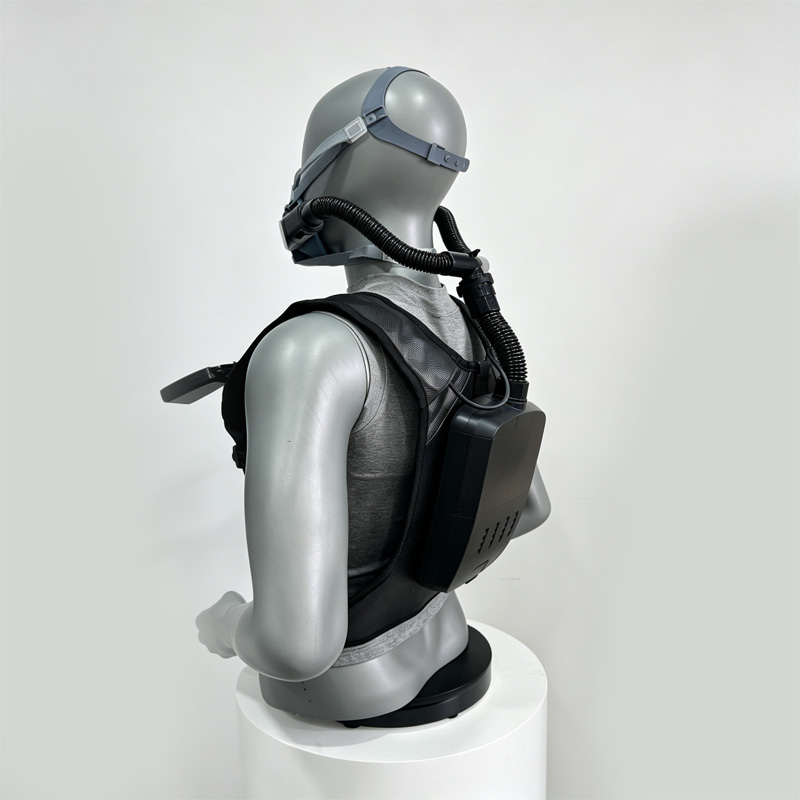
    The BXH-3003 is the latest PAPR from NEW AIR .It serves as the core blower unit of a high-performance Powered Air-Purifying Respirator , a professional personal respiratory protection system engineered for use in high-risk environments such as industrial operations and contaminated work sites. As the power heart of the entire system, this PAPR actively draws in ambient air, purifies it through multi-stage filtration, and delivers a continuous stream of clean, positive-pressure airflow to the user’s facepiece. This positive pressure acts as a critical barrier, preventing contaminants from entering the breathing zone and establishing a robust, reliable line of defense for the user. A key advantage of this air papr blower lies in its powerful and stable airflow performance. It features three adjustable airflow levels, reaching a maximum of 130 L/min, which adapts to different work intensities and ensures consistent positive pressure inside the facepiece—even during periods of heavy breathing—to guarantee uncompromised protection. Furthermore, the blower operates at a noise level below 65 dB, eliminating auditory distractions and significantly enhancing user comfort and focus during long shifts. Its core motor boasts a service life of over 50,000 hours, built to withstand the rigors of frequent, heavy-duty industrial use and reduce long-term replacement costs.   The BXH-3003 PAPR is equipped with a scientifically designed, high-efficiency multi-stage filtration system that provides layered protection for clean air. Air first passes through a spark arrester and optional pre-filter media to capture large particulate matter. It can then be paired with an optional carbon pre-filter to adsorb odors and certain organic vapors, before undergoing final purification by a HEPA filter with a filtration efficiency of 99.97%, meeting the TM3 filter grade. This modular filtration structure not only simplifies maintenance and replacement but also allows the entire PAPR system to adapt flexibly to diverse work environments, offering reliable protection against dust, fumes, and microbial aerosols.   In terms of power and runtime, the BXH-3003 PAPR is powered by a dedicated 3400mAh (25.16Wh) lithium battery, providing ample endurance for extended work periods. Depending on the airflow setting, operating times reach 11 hours, 9 hours, and 7 hours respectively, fully covering a complete single work shift. The battery operates at a rated voltage of 7.4V, charges in just 2.5 hours, and supports over 500 charge-discharge cycles for excellent durability. Additionally, the unit features a comprehensive system alarm function: in the event of low battery power or a clogged filter (low airflow), both audible and visual alerts (flashing red light) activate, promptly notifying the user to replace the filter or recharge the battery and preventing loss of protection due to equipment failure. The design of the BXH-3003 PAPR prioritizes practicality and portability for industrial use. The main unit weighs only 542±10g without the battery, and just 720±10g with the battery installed. When paired with the dedicated harness and breathing hose, it adds minimal physical burden to the user. With compact dimensions of 237×158×48mm, the blower is easy to store and transport. The system’s modular design allows for quick, tool-free removal and replacement of the front cover, filters, battery, and other components, greatly improving on-site maintenance efficiency and ensuring the papr respirator system is always ready for use.   As the central unit of the entire PAPR system, the BXH-3003 blower is not merely the power source for air purification—it is a reliable safeguard for the user’s ability to breathe safely. It perfectly combines powerful airflow performance, high-efficiency multi-stage filtration, stable battery life, and user-centric design, delivering a professional-grade respiratory protection solution for a wide range of scenarios including industrial manufacturing, construction, and healthcare. With the BXH-3003 PAPR, users can work confidently in high-contamination environments without worrying about the risk of contaminant exposure.If you want know more, please click www.newairsafety.com.
    Read More

leave a message

leave a message
If you are interested in our products and want to know more details,please leave a message here,we will reply you as soon as we can.
submit
Contact Us: sales@txhyfh.com

home

products

WhatsApp

Contact us