inquiry
Leave A Message
If you are interested in our products and want to know more details,please leave a message here,we will reply you as soon as we can.
submit
Bengbu Longkai Welding Protection Technology Co.,Ltd.
Home

papr respiratory protection

papr respiratory protection

  • PAPR for Automotive Spraying: Why & How to Choose
    PAPR for Automotive Spraying: Why & How to Choose
    Dec 11, 2025
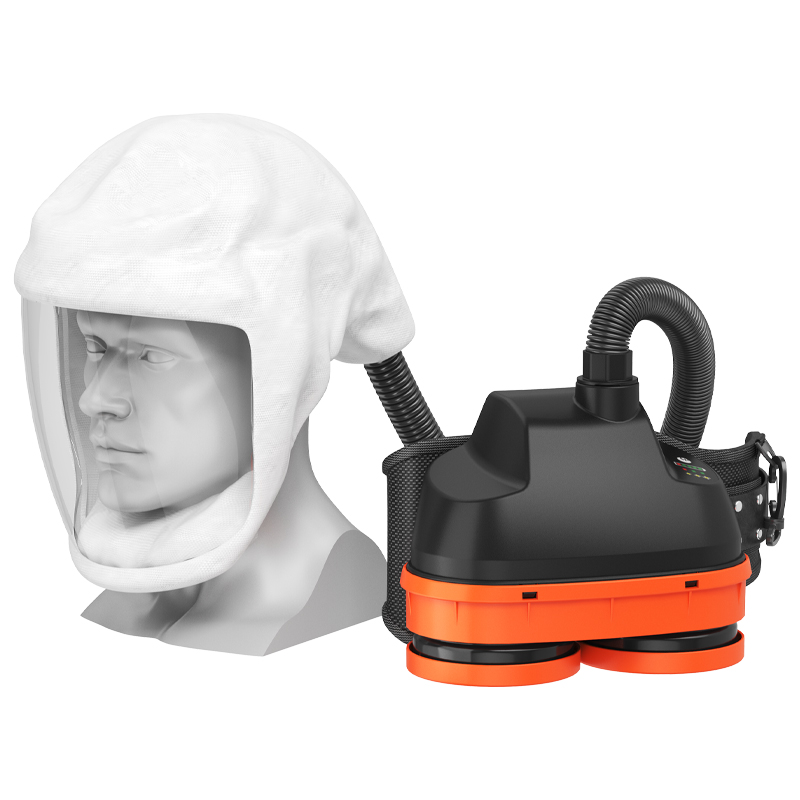
      Automotive spraying is a task that imposes dual strict requirements on both process precision and practitioners' health. It not only needs to ensure a smooth, even paint finish with consistent color but also has to deal with various harmful substances pervading the operation. During the spraying process from primer, base coat to clear coat, hazardous materials like paint mist particles, organic vapors and Volatile Organic Compounds (VOCs) are everywhere. Ordinary dust masks or half-masks can barely provide comprehensive protection; what's worse, their high breathing resistance may affect operational stability. As professional protective equipment,air powered face mask (PAPR) has become a "standard protective barrier" in automotive spraying scenarios, thanks to its dual advantages of active air supply and high-efficiency filtration. Today, we'll explore the core reasons why PAPR is a must for automotive spraying and how to select the right model for the scenario.   The particularity of the automotive spraying environment determines that ordinary protective equipment is far from meeting the demands—and this is exactly the core value of PAPR. Firstly, the spraying process produces paint mist particles with a diameter of only 0.1-10 microns. Such fine particles can easily penetrate ordinary masks, and long-term inhalation will deposit in the lungs, leading to occupational diseases like pneumoconiosis. Meanwhile, solvents in the paint (such as toluene and xylene) will volatilize into high-concentration organic vapors. Ordinary activated carbon masks have limited adsorption capacity and will become saturated and ineffective in a short time. Secondly, automotive spraying often requires complex postures like bending over and leaning sideways for long periods. The breathing resistance of ordinary masks increases as usage time goes on, making operators breathe laboriously and lose concentration, which in turn affects the precision of the paint finish. Positive Pressure Air Purifying Respirator With Hard Hat actively delivers clean air through an electric fan, which not only has almost zero breathing resistance but also can block over 99.97% of fine particles and harmful vapors via high-efficiency filtration components, balancing protection and operational comfort.   Besides basic protection, PAPR can also indirectly improve the process quality of automotive spraying—which is another key reason for it becoming an industry necessity. If ordinary protective equipment has poor airtightness, external dust will enter the gap between the mask and the face. Such dust adheres to the undried paint surface, forming "dust spots" and increasing rework costs. However, PAPR masks are mostly designed as full-face or half-face masks, and the elastic sealing ring ensures a tight fit with the face, effectively preventing external pollutants from entering. More importantly, PAPR's active air supply system creates a slight positive pressure environment inside the mask. Even if there's a tiny gap in the mask, clean air will flow outward instead of external pollutants seeping inward. This fundamentally avoids dust defects on the paint surface, which is particularly crucial for fine spraying of high-end automobiles.   Choosing the right Electric Air Supply Respirator model is a prerequisite for exerting protective effects. For automotive spraying scenarios, two core indicators—"filter component type" and "air supply mode"—should be the focus. In terms of filtration needs, the main pollutants in automotive spraying are composite pollutants of organic vapors and paint mist particles. Therefore, a combined filtration system of "organic vapor cartridge + HEPA high-efficiency filter cotton" must be selected: the cartridge can absorb organic solvent vapors like toluene and ethyl acetate, while the HEPA filter cotton blocks fine paint mist particles. The combination of the two achieves comprehensive filtration. In terms of air supply mode, it's recommended to prioritize "portable battery-powered PAPR". It's lightweight (usually 2-3 kg) and has a battery life of 8-12 hours, which can meet the demand for continuous spraying throughout the day. Moreover, it's not restricted by external air hoses, allowing operators to move freely around the vehicle body—ideal for spraying parts like doors and hoods.   It's worth noting that selecting PAPR for automotive spraying also needs to take industry standards and practical details into account. PAPR is not an "optional equipment" for automotive spraying but a "must-have tool" to protect health and process quality. Choosing the right model and conducting proper maintenance can make spraying operations safer and more           efficient. If you want know more , please click the www.newairsafety.com.
    Read More
  • PAPR Consumables Incompatibility: Why Different Brands Don’t Mix?
    PAPR Consumables Incompatibility: Why Different Brands Don’t Mix?
    Dec 01, 2025
      In high-risk work scenarios such as chemical engineering, metallurgy, and construction, air fed respirator serves as the "lifeline" safeguarding workers' respiratory safety. The stable operation of this system relies not only on the power output of the core fan but also on the coordinated cooperation of a series of consumable components, including spark arrestors, pre-filters, HEPA filters, and breathing tubes. However, in practical use, many enterprises encounter a tricky problem: the sizes of consumable components for PAPRs from different brands vary greatly, which directly results in incompatibility between components of different fans.Choosing incompatible parts at will not only affect system operation, but may also create serious safety hazards.   Why do consumable components of powered mask respirator from different brands have size differences? The core reason is that there is no fully unified size standard for consumables in the industry. Enterprises usually customize exclusive component size specifications based on their own fan's structural design, power parameters, and protective requirements. On one hand, fundamental parameters such as air duct diameter, interface design, and installation slot position of fans from different brands are essentially different. To achieve optimal sealing and air supply efficiency, supporting consumables must accurately match these parameters. On the other hand, some enterprises intentionally adopt differentiated size designs to build technical barriers and ensure product competitiveness, ensuring that their consumables can only be compatible with their own fans. This fundamentally eliminates the possibility of cross-brand compatibility.   The most representative examples of compatibility issues are spark arrestors and pre-filters. As a key component preventing sparks from entering the fan and causing hazards, spark arrestors vary significantly among different brands in terms of outer diameter, inner mesh aperture, and connecting thread specifications with the fan. A spark arrestor for a fan of Brand A may use an M20 threaded interface with an outer diameter of 35mm, while Brand B's may have an M18 thread and an outer diameter of 32mm. Forced replacement will not only fail to tighten and fix the component but also leave gaps leading to spark leakage. Pre-filters also have obvious size differences: some brands adopt a circular design with a diameter of 150mm, matching the annular slot of their own fans; others have a square structure with a side length of 145mm, paired with a snap-on installation. These two types are completely incompatible with each other.   Compatibility challenges with HEPA filters and breathing tubes are even more directly related to the core effect of respiratory protection. As a key component for filtering fine particles, HEPA filters differ in sealing edge width, installation depth, and docking method with the fan. For example, the sealing edge width of Brand A's HEPA filter is 8mm and the installation depth is 20mm, while the corresponding dimensions of Brand B are 10mm and 18mm. Even if it is barely installed, the poor sealing will cause unfiltered air to leak, significantly reducing the protection level. Breathing tubes also have prominent compatibility issues: different brands have differences in interface diameter and thread design. Some use quick-plug interfaces, while others adopt screw-lock interfaces. Mixing them not only causes abnormal air supply resistance but also may suddenly fall off during operation, triggering safety accidents.   Incompatible components bring not only inconvenience in use but also multiple hidden risks. To save costs, many enterprises try to purchase non-original "universal accessories", which often leads to increased fan operation noise, reduced air supply efficiency, and even fan shutdown due to component jamming. More seriously, inappropriate filter components cannot effectively block harmful substances, which may cause workers to inhale dust and toxic gases; breathing tubes with poor sealing will allow external pollutants to seep in, rendering the PAPR completely ineffective. The root cause of these problems lies in ignoring the uniqueness of consumable sizes for PAPRs of different brands and equating "universal" with "compatible".   To address the compatibility challenges of powered air supply respirator consumables, enterprises and workers should establish a sense of "accurate matching". When replacing components, first check the brand and model of the fan, and give priority to original supporting consumables to ensure that the size, interface, and sealing performance are fully compatible. If changing brands, consult the supplier in advance to confirm the compatibility of new components with existing fans, and conduct on-site tests if necessary. After all, the protective effect of PAPR depends on the precise coordination of each component. Only by rejecting compromised compatibility can this "lifeline of protection" truly play its role and lay a solid foundation for work safety.If you want know more,please click www.newairsafety.com.
    Read More
  • Differences Between TH3 and TM3 in PAPRs
    Differences Between TH3 and TM3 in PAPRs
    Nov 11, 2025
       Among the protection level designations of PAPRs (Powered Air-Purifying Respirators), TH3 and TM3 are two categories that are easily confused. Many practitioners may wonder when selecting products: if both are "Level 3" protection, why is there a distinction between "TH" and "TM"? In fact, these two designations are not randomly assigned, but are specialized protection levels defined based on internationally accepted classification standards for respiratory protective equipment, targeting different environmental risks, pollutant types, and usage requirements. Clarifying the core differences between them is crucial for accurately matching PAPRs to work scenarios.   To understand the difference between the two, it is first necessary to clarify the core definition of the designations: the "3" in TH3 and TM3 represents the intensity of the protection level (usually corresponding to protection requirements for high-concentration or long-term exposure scenarios), while the prefixes "TH" and "TM" directly point to the core risks of the protection scenarios. "TH" is the abbreviation of "Thermal/High-humidity", which is mainly suitable for high-temperature, high-humidity scenarios accompanied by particulate pollution; "TM" is the abbreviation of "Toxic/Mist", focusing on environments with toxic gases, vapors, or misty pollutants. In simple terms, the essential difference between the two lies in "different core risks of the protection scenarios", which in turn leads to differences in key performances such as design, filtration system, and materials.    In terms of applicable scenarios and protection objects, the boundaries between TH3 and TM3 are clear and highly targeted. The core application scenarios of TH3-type PAPRs are concentrated in fields with high-temperature, high-humidity and particulate pollution, such as blast furnace maintenance in the metallurgical industry, boiler maintenance, and ceramic firing workshops. In these scenarios, the ambient temperature often exceeds 40°C, the relative humidity is over 80%, and there are a large amount of metal dust and slag particles. Therefore, the protection focus of TH3 is "high-temperature resistance + damp-heat protection + particulate filtration", which needs to ensure that the motor does not shut down at high temperatures, the mask does not fog up, and the filter cotton does not fail due to moisture absorption. The TM3-type air papr, on the other hand, are mainly used in scenarios with toxic and harmful gases/vapors or misty pollutants, such as solvent volatilization operations in the chemical industry, paint spraying, and pesticide production. The pollutants are mostly organic vapors (such as toluene and xylene) and acidic droplets (such as sulfuric acid mist). Its protection core is "efficient toxin filtration + anti-leakage". The filtration system needs to be equipped with a special toxic gas filter canister (instead of a simple filter cotton), and the mask has higher requirements for sealing performance to prevent toxic substances from infiltrating.   Differences in design processes and core performances are the technical support for TH3 and TM3 to adapt to different scenarios. TH3-type papr respirators focus on "environmental stability resistance" in key components: the motor uses high-temperature resistant materials (such as insulation coatings resistant to 120°C), the mask is equipped with an anti-fog coating and a ventilation and diversion structure, the filter cotton uses hydrophobic materials to avoid clogging due to moisture absorption, and some models also add heat dissipation holes. The design focus of TM3-type PAPRs is "toxicity prevention and sealing": the toxic gas filter canister adopts a layered adsorption structure (such as a combination of activated carbon and chemical adsorbents), and the adsorption materials are customized for different toxic substances; the fitting part of the mask and the face uses high-elastic silica gel to reduce gap leakage; some high-end models also integrate a gas concentration alarm function to monitor the failure risk of the toxic gas filter canister in real time. In addition, the certification standards for the two are also different - TH3 needs to pass the particulate filtration efficiency test in high-temperature and high-humidity environments, while TM3 needs to pass the penetration rate test of specific toxic gases.   Confusing TH3 and TM3 during selection may lead to "protection failure" or "excessive investment". If a TH3-type PAPR is incorrectly used in a chemical spraying scenario, it can only filter paint mist particles but cannot adsorb organic vapors, leading to inhalation of toxic substances. If a TM3-type PAPR is selected for boiler maintenance scenarios, although it can filter dust, the motor is prone to overload in high-temperature environments, and the toxic gas prevention function of the filter canister is completely redundant, increasing equipment costs. Therefore, the core principle for selection is to "target the core risks of the scenario": first determine whether the environment is "high-temperature and high-humidity + particulate matter" or "toxic gas/mist + particulate matter", then select TH3 or TM3 accordingly. In short, the difference between TH3 and TM3 is not "level height", but "scenario adaptation". Accurate matching is the key to respiratory protection.If you want know more,please click www.newairsafety.com.
    Read More

leave a message

leave a message
If you are interested in our products and want to know more details,please leave a message here,we will reply you as soon as we can.
submit
Contact Us: sales@txhyfh.com

home

products

WhatsApp

Contact us