inquiry
Leave A Message
If you are interested in our products and want to know more details,please leave a message here,we will reply you as soon as we can.
submit
Bengbu Longkai Welding Protection Technology Co.,Ltd.
Home

Best Powered Air Purifying Respirator

Best Powered Air Purifying Respirator

  • PAPR Protection Key Differences between NPF and APF
    PAPR Protection Key Differences between NPF and APF
    Sep 16, 2026
      When selecting, testing and deploying Powered Air Respirator System (PAPRs), NPF and APF are two commonly encountered parameters that are often confused. Many professionals wonder why authoritative product standards for PAPRs such as EN12941 specify performance testing but do not include APF. The fundamental reason is that NPF is a laboratory product performance metric, while APF is a field-focused practical protection parameter. They differ in definition, test conditions and application purpose, and understanding both is essential for compliant PAPR deployment. First, NPF (Nominal Protection Factor) is a laboratory metric for product type certification under EN12941. When manufacturers submit papr system kits for testing, the complete assembly is evaluated in a controlled laboratory environment to measure Total Inward Leakage (TIL), from which the NPF value is calculated. This also determines the product’s TH1, TH2 or TH3 protection class. Tests are carried out under highly controlled conditions with defined test subjects, airflow and fitting procedures. NPF establishes the maximum achievable protection of the hardware itself and serves as the key basis for CE certification and product classification. However, it cannot represent real-world protection performance at work sites.   APF (Assigned Protection Factor), by contrast, is a practical parameter for on-site safety management, primarily used for hazard assessment and respirator selection. As defined in the EN529 guidance for selection, use and maintenance of respiratory protective equipment, APF describes the contaminant reduction factor achievable in over 95% of field conditions, provided users are properly trained, equipment remains intact and respirators are worn correctly. It accounts for real-world variables including variations in facial characteristics, body movement during work, ambient air turbulence and equipment wear over time. APF is the compliant reference companies must use to verify whether a PAPR is suitable for a given contaminant concentration.   The core distinction boils down to ideal performance limit versus real-world safety baseline. NPF represents the theoretical peak protection achieved under optimal laboratory conditions. For example, an EN12941-certified Class TH3 positive airflow respirator delivers an NPF of 500 in lab tests, yet this level of performance can hardly be replicated in busy workshops or construction sites. APF is a conservative safety value derived from extensive field experience. It discounts all potential real-world uncertainties and is always lower than NPF. This prevents over-reliance on theoretical protection levels and mitigates safety risks to protect workers' health. In industrial practice, their roles are clearly separated. During R&D, product testing and certification audits, NPF and TH classification are the accepted benchmarks to define product quality. When companies conduct site risk assessments, match respirators to workplace hazards and develop protection plans, APF must be used. Compliance is confirmed by comparing APF against the workplace hazard factor. To summarise:NPF defines the product’s upper limit for certification and grading; APF sets the minimum safe performance for field operation. Both are necessary and complementary.   NEW AIR has years of expertise in the R&D, manufacturing and compliance support of respiratory protection equipment. We fully understand the standard logic and practical gaps between NPF and APF. All our PAPRs undergo type testing in line with EN12941 to guarantee validated NPF ratings and robust hardware performance. We build professional, reliable respiratory protection barriers for industrial workers across all applications. If you want know more, please click www.newairsafety.com.
    Read More
  • BXH-3003 Super Thin Backpack Style PAPR
    BXH-3003 Super Thin Backpack Style PAPR
    Jun 01, 2026
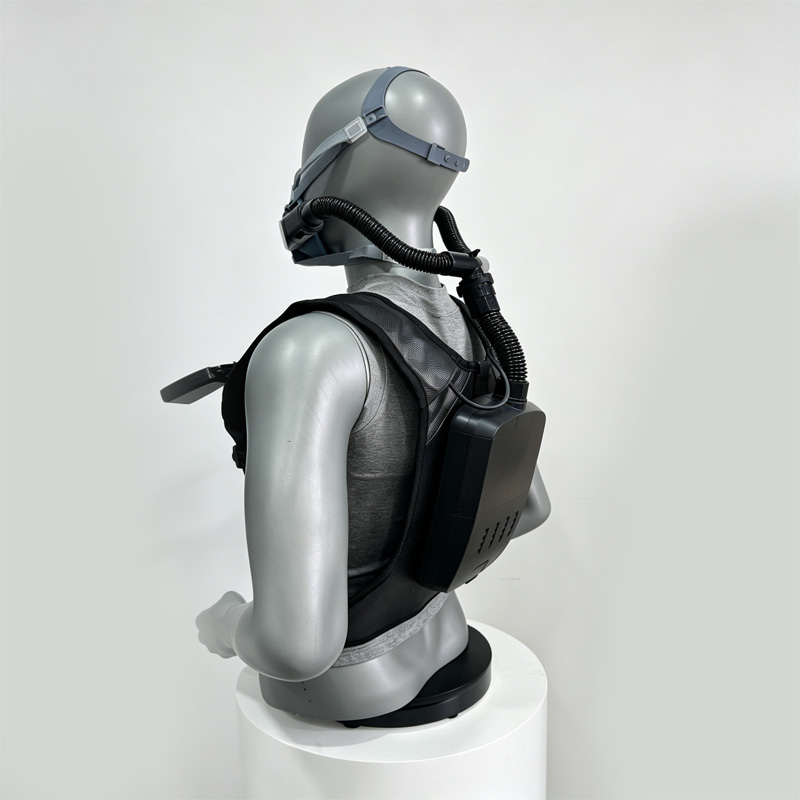
    The BXH-3003 is the latest PAPR from NEW AIR .It serves as the core blower unit of a high-performance Powered Air-Purifying Respirator , a professional personal respiratory protection system engineered for use in high-risk environments such as industrial operations and contaminated work sites. As the power heart of the entire system, this PAPR actively draws in ambient air, purifies it through multi-stage filtration, and delivers a continuous stream of clean, positive-pressure airflow to the user’s facepiece. This positive pressure acts as a critical barrier, preventing contaminants from entering the breathing zone and establishing a robust, reliable line of defense for the user. A key advantage of this air papr blower lies in its powerful and stable airflow performance. It features three adjustable airflow levels, reaching a maximum of 130 L/min, which adapts to different work intensities and ensures consistent positive pressure inside the facepiece—even during periods of heavy breathing—to guarantee uncompromised protection. Furthermore, the blower operates at a noise level below 65 dB, eliminating auditory distractions and significantly enhancing user comfort and focus during long shifts. Its core motor boasts a service life of over 50,000 hours, built to withstand the rigors of frequent, heavy-duty industrial use and reduce long-term replacement costs.   The BXH-3003 PAPR is equipped with a scientifically designed, high-efficiency multi-stage filtration system that provides layered protection for clean air. Air first passes through a spark arrester and optional pre-filter media to capture large particulate matter. It can then be paired with an optional carbon pre-filter to adsorb odors and certain organic vapors, before undergoing final purification by a HEPA filter with a filtration efficiency of 99.97%, meeting the TM3 filter grade. This modular filtration structure not only simplifies maintenance and replacement but also allows the entire PAPR system to adapt flexibly to diverse work environments, offering reliable protection against dust, fumes, and microbial aerosols.   In terms of power and runtime, the BXH-3003 PAPR is powered by a dedicated 3400mAh (25.16Wh) lithium battery, providing ample endurance for extended work periods. Depending on the airflow setting, operating times reach 11 hours, 9 hours, and 7 hours respectively, fully covering a complete single work shift. The battery operates at a rated voltage of 7.4V, charges in just 2.5 hours, and supports over 500 charge-discharge cycles for excellent durability. Additionally, the unit features a comprehensive system alarm function: in the event of low battery power or a clogged filter (low airflow), both audible and visual alerts (flashing red light) activate, promptly notifying the user to replace the filter or recharge the battery and preventing loss of protection due to equipment failure. The design of the BXH-3003 PAPR prioritizes practicality and portability for industrial use. The main unit weighs only 542±10g without the battery, and just 720±10g with the battery installed. When paired with the dedicated harness and breathing hose, it adds minimal physical burden to the user. With compact dimensions of 237×158×48mm, the blower is easy to store and transport. The system’s modular design allows for quick, tool-free removal and replacement of the front cover, filters, battery, and other components, greatly improving on-site maintenance efficiency and ensuring the papr respirator system is always ready for use.   As the central unit of the entire PAPR system, the BXH-3003 blower is not merely the power source for air purification—it is a reliable safeguard for the user’s ability to breathe safely. It perfectly combines powerful airflow performance, high-efficiency multi-stage filtration, stable battery life, and user-centric design, delivering a professional-grade respiratory protection solution for a wide range of scenarios including industrial manufacturing, construction, and healthcare. With the BXH-3003 PAPR, users can work confidently in high-contamination environments without worrying about the risk of contaminant exposure.If you want know more, please click www.newairsafety.com.
    Read More

  • How to Choose the Right PAPR? A Buying Guide
    How to Choose the Right PAPR? A Buying Guide
    Nov 05, 2025
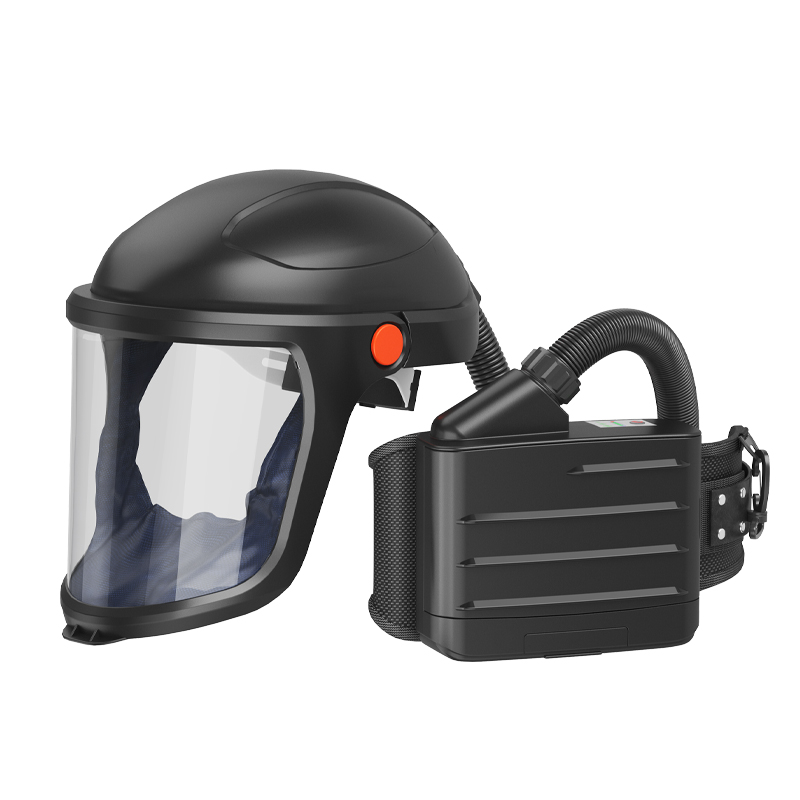
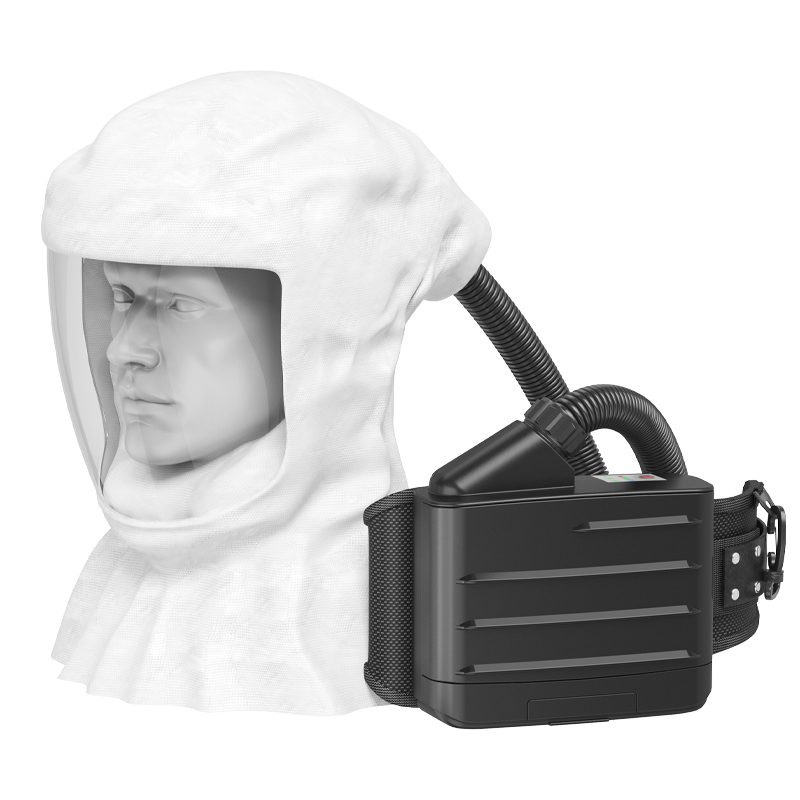
      In workplaces with respiratory hazards such as chemical engineering, mining, powered air-purifying respirators (PAPRs) are key equipment for safeguarding health. Compared with traditional masks, they offer more stable protection and greater wearing comfort. However, the market is flooded with a wide range of products, so mastering core selection methods is essential to find the right fit.   Clarifying the work scenario is the first step. For dust-prone environments like mines and construction sites, prioritize PAPRs equipped with N95 or higher-grade filter cotton. For scenarios involving hazardous gases such as chemical industry, it is necessary to match corresponding gas cartridges and ensure the protection range matches the type of pollutants. For special environments with humidity, high temperature or electrostatic risks, pay attention to the product's waterproof, high-temperature resistant and anti-static properties.   Core performance parameters are key considerations. Filtration efficiency must meet international standards ( US NIOSH, EU CE), ensuring no less than 95% filtration efficiency for target pollutants. For high-risk scenarios, 99.9% high-efficiency filters are recommended. For continuous operations over 8 hours, choose models with replaceable batteries or fast-charging function to avoid protection gaps caused by power outages.   Wearing comfort and adaptability directly affect user acceptance and compliance. For hooded PAPRs, the weight should preferably be controlled within 1.5 kg, while face-mask types are lighter and won't cause neck fatigue during long-term wear. Fit is also crucial—select styles with adjustable headbands and soft face seals to ensure a snug fit for different head shapes. Meanwhile, check the field of vision to avoid obstructing operational vision. Brand qualifications and after-sales service are essential guarantees. Avoid unqualified products from small manufacturers for low prices; prioritize brands with rich R&D experience in protective equipment and authoritative certifications (such as CE, national standard testing certificates). Confirm sufficient supply of consumables like filter cotton, and check if the brand provides on-site commissioning, staff training and fault repair services.   Additionally, ensure the product supports regular calibration, as papr respirator system performance degrades over time, and calibration maintains protection effectiveness.   Finally, it's important to note that there is no "one-size-fits-all" PAPR, only "suitable models". Before purchasing, investigate frontline needs and conduct trial wears if necessary. Establish a sound usage management system, including regular replacement of filters, battery maintenance and staff operation training, to ensure the PAPR truly exerts its protective effect.If you want know more, please click  www.newairsafety.com.
    Read More

leave a message

leave a message
If you are interested in our products and want to know more details,please leave a message here,we will reply you as soon as we can.
submit
Contact Us: sales@txhyfh.com

home

products

WhatsApp

Contact us